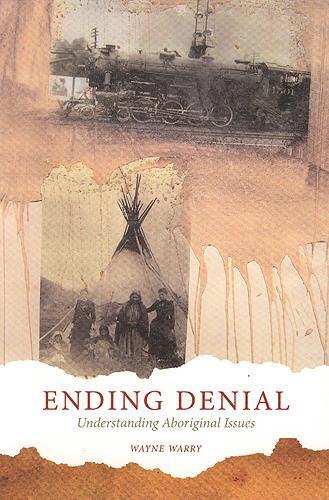
Книга Ending Denial: Understanding Aboriginal Issues
Warry offers a sensitive, powerful, and careful argument that explains why the neo-Conservative approach to relations with Indigenous communities (now espoused by the Government of Canada) is deeply deficient. Using an anthropological perspective to describe the complexities that emerge in the relationship between Indigenous peoples and Canada, he explains the critical role that an understanding of culture plays in creating a more inclusive and just society. -- Michael Asch, University of Victoria Aboriginal issues are complex and require deep understanding in order to deal effectively with them. Warry brings two decades of experience, as an academic researcher and community consultant, to what he describes as 'the vexing question' of the continuing exclusion of Aboriginal peoples from effective participation in Canada. His clear insightful text makes a significant contribution towards creating this understanding. Contemporary Aboriginal issues are presented as part of a more than century long debate about the place of Aboriginal peoples within Canada. Ending Denial deserves to be on the reading list for Canadian Studies and Indigenous Studies courses, and to be read by all Canadians wishing to better understand the most important issue facing Canadians today. -- David Newhouse, Chair, Indigenous Studies, Trent University
There is an unconscious racism at work in Canada—an ignorance of Aboriginal peoples and culture that breeds indifference to, and ambivalence about, Aboriginal poverty and ill health. Warry examines conservative arguments and mainstream views that promote assimilation and integration as the solution to Aboriginal marginalization. He argues that we must acknowledge our denial of colonialism in order to reach a deeper understanding of contemporary Aboriginal culture and identity, both on and off the reserve. Only then can we fully recognize Aboriginal peoples' rights and the path to self-determination.
In short related essays Warry counters arguments found in mainstream academic and popular writing and critiques conservative attitudes from a perspective informed by social science research. From this viewpoint he examines colonialism and history, land claims and resource rights, culture and contemporary identity, urban Aboriginal communities, and the nature of self-government and Aboriginal citizenship.