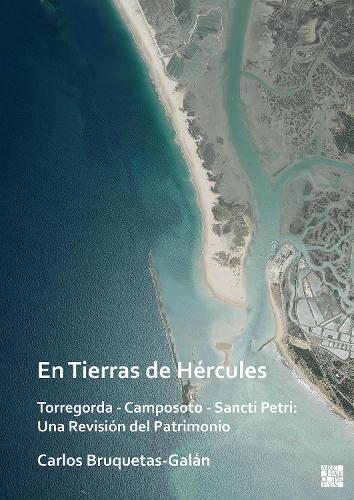
Книга En Tierras de Hércules. Torregorda - Camposoto - Sancti Petri: Una Revisión del Patrimonio
En tierras de Hércules explores the history and archaeological heritage of the southwest coast of the Isla Gaditana – the territory where the Temple of Hercules and the Idol of Cádiz are said to have stood for more than twelve centuries: Torregorda, Camposoto and Sancti Petri.
The text examines the occupation sequence of Palaeolithic, Neolithic, Bronze-Age and historic societies in the area. In addition, it analyses the shaping of the landscape by geological, sedimentary and human action since the Phoenician settlement. The historical region of the Strait of Gibraltar, considered the end of the ‘known world’ until the modern age, is studied as an intercontinental and cultural bridge.
The core of the work is an examination of 32 groups of remains, classified according to communicational, strategic and environmental factors. This includes those relating to the underwater site of the Sancti Petri Castle, which are usually associated with the Temple of Hercules. Using manuscripts from local archives, the book documents elements such as the emergence of the underwater remains of the Temple of Hercules or the construction of canals and defensive architecture. And by means of prehistoric rock art, it examines the origins of sailing in the vicinity of Gibraltar. A final chapter recommends the investigation of the millenary intersection between the Rio Arillo channel and the Calzada de La Alcantarilla road.
Este libro explora el proceso histórico y el patrimonio arqueológico en la costa suroeste de la Isla Gaditana. Es una investigación histórico-arqueológica sobre la ocupación prehistórica, la construcción del paisaje y el patrimonio. Expone una aproximación al territorio donde se sostiene que el Templo de Hércules y el Ídolo de Cádiz permanecieron en pie más de doce siglos: el sector Torregorda – Camposoto – Sancti Petri.
El texto examina la ocupación por sociedades paleolíticas, neolíticas, del Bronce y de tiempos históricos, mediante acreditadas investigaciones. Además analiza la construcción del paisaje por motivos geológicos, sedimentarios y humanos desde el asentamiento fenicio. La región histórica del Estrecho de Gibraltar, considerada final del “mundo conocido” hasta la Edad Moderna, es estudiada como puente intercontinental y cultural.
El núcleo del trabajo es la revisión de 32 grupos de vestigios, clasificados según factores comunicacionales, estratégicos y ambientales. Esto incluye el yacimiento subacuático del Castillo de Sancti Petri que se suele asociar con el Templo de Hércules. Mediante manuscritos de archivos gaditanos, el libro documenta elementos tales como la emergencia de vestigios subacuáticos del Templo o la construcción de canales y arquitectura defensiva. Y mediante pinturas rupestres se examinan los orígenes de la navegación a vela cerca de Gibraltar. El último capítulo recomienda prospectar el cruce milenario del Caño de Rio Arillo con la Calzada de la Alcantarilla.