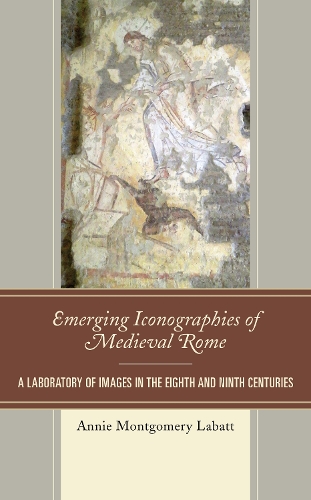
Книга Emerging Iconographies of Medieval Rome: A Laboratory of Images in the Eighth and Ninth Centuries
Emerging Iconographies of Medieval Rome examines the development of Christian iconographies that had not yet established themselves as canonical images, but which were being tried out in various ways in early Christian Rome. This book focuses on four different iconographical forms that appeared in Rome during the eighth and ninth centuries: the Anastasis, the Transfiguration, the Maria Regina, and the Sickness of Hezekiah—all of which were labeled “Byzantine” by major mid-twentieth century scholars. The trend has been to readily accede to the pronouncements of those prominent authors, subjugating these rich images to a grand narrative that privileges the East and turns Rome into an artistic backwater. In this study, Annie Montgomery Labatt reacts against traditional scholarship which presents Rome as merely an adjunct of the East. It studies medieval images with formal and stylistic analyses in combination with use of the writings of the patristics and early medieval thinkers. The experimentation and innovation in the Christian iconographies of Rome in the eighth and ninth centuries provides an affirmation of the artistic vibrancy of Rome in the period before a divided East and West. Labatt revisits and revives a lost and forgotten Rome—not as a peripheral adjunct of the East, but as a center of creativity and artistic innovation.
"
Emerging Iconographies provides a survey of innovative iconographic themes in eighth- to ninth-century century Rome, an era when many major images were not yet standardized. Labatt (visual arts, Sweetbriar College) focuses on four case studies, all with differing trajectories. The Anastasis, later synonymous with Byzantine depictions of the Resurrection, actually had its origins earlier in Rome and then fell out of favor in the West. The Transfiguration, in contrast, was subject to various experimental renderings, “good tries” that often did not become the norm. The bejeweled Maria Regina was a new Western image; it never appeared in the East and soon disappeared in the West. Finally, Hezekiah in his sickness turning his face away from the viewer was depicted just once. Labatt is concerned with the evolution of images, their repetition, variation, and occasional dead ends. Synthesizing and critiquing the complex and conflicting scholarship in this field, she counters the traditional view that Western art is always dependent on Byzantium. Instead, she argues for the fertility of Roman image-making, building on its vibrant early Christian past, and turns from stylistic or political arguments to consider issues of religious belief in the period. Summing Up: Recommended. Upper-division undergraduates through faculty.
" - CHOICE