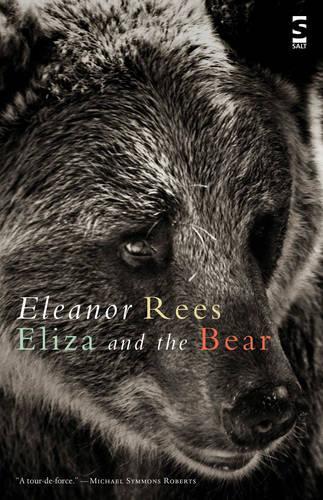
Книга Eliza and the Bear
This is a strongly contemporary voice, but always on the edges of myth, dream, fairy-tale. The title sequence is remarkable: a sustained piece of dramatic-poetic writing, a tour-de-force. -- Michael Symmons Roberts This is a strongly contemporary voice, but always on the edges of myth, dream, fairy-tale. The title sequence is remarkable: a sustained piece of dramatic-poetic writing, a tour-de-force. -- Michael Symmons Roberts
Eleanor Rees’s first collection, Andraste’s Hair was shortlisted for Best First Collection in the 2007 Forward Prizes and for the 2008 Glen Dimplex Poetry Award. In her second full-length collection she continues to play the role of mythologiser and tale teller, moving away from her previous subject, the imagined city, into the magical psyches of changeling creatures.
In powerful nocturnal encounters silent visitors travel from the dark world, take on elemental form and embrace Rees’s narrators with sensual and erotic urgency. Laced with tales of physical transformations, Rees’s use of fairy stories and night visions radically reimagines the female experience through the psychic collisions of the body and our desires.
Eliza and the Bear offers a man who gives birth, trees that sing, a dissolving house, a woman trapped in walls, a peasant farmer in his barren fields, the wife of a Victorian botanist who longs for a child while her husband ‘discovers’ the new world, winter songs and red hot hearths: mysterious forces which have their home within us all.
Eleanor Rees’s first collection, Andraste’s Hair was shortlisted for Best First Collection in the 2007 Forward Prizes and for the 2008 Glen Dimplex Poetry Award. In her second full-length collection she continues to play the role of mythologiser and tale teller, moving away from her previous subject, the imagined city, into the magical psyches of changeling creatures.
In powerful nocturnal encounters silent visitors travel from the dark world, take on elemental form and embrace Rees’s narrators with sensual and erotic urgency. Laced with tales of physical transformations, Rees’s use of fairy stories and night visions radically reimagines the female experience through the psychic collisions of the body and our desires.
Eliza and the Bear offers a man who gives birth, trees that sing, a dissolving house, a woman trapped in walls, a peasant farmer in his barren fields, the wife of a Victorian botanist who longs for a child while her husband ‘discovers’ the new world, winter songs and red hot hearths: mysterious forces which have their home within us all.
"
Eleanor Rees's debut collection offers up a heartfelt hymn to her native Liverpool. Her dense, textured renderings of its landscapes are eloquent, but it is her importunate, ambiguous relationship with the city that provides these poems with their drive. She is at once possessor and possessed: bestriding the rooftops like a descendent of Whitman one moment, breaking "the top from the cathedral . . . oozing steam/ cream"; diminished and vulnerable, "tarmac . . . biting at my ankles", the next.
" - The Guardian"
... incantatory, spell-like, trance-inducing – poetry as magical utterance to which you have to submit, make a willing suspension of disbelief ...
" - Stride magazine"
Rees’s work is completely deserving of its shortlist position, even more so for a voice outside the mainstream.
" - Metro"
Rees comes close to describing the nature of her vision when she writes ‘marrow is all my thinking // as thinking is tired and broken / has no cohesion ... thinking thinks too much of itself’. As ‘marrow’ suggests, the core of experience is deep and hidden, and in the romantic-expressionist tradition it is this deep apprehension, not the processes of conscious thought, that most compel her ... lusciously, swooningly female in the restless, mobile eroticism that flows throughout the book ... The expressionist character of Rees’ work is bold and demanding. She offers nothing that is cheaply mimetic or demotic.
" - PN Review