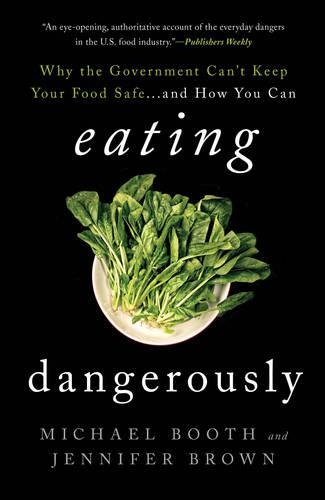
Книга Eating Dangerously: Why the Government Can't Keep Your Food Safe ... and How You Can
Americans are afraid of their food. And for good reason. In 2011, the deadliest food-borne illness outbreak in a century delivered killer listeria bacteria on innocuous cantaloupe never before suspected of carrying that pathogen. Nearly 50 million Americans will get food poisoning this year. Spoiled, doctored or infected food will send more than 100,000 people to the hospital. Three thousand will die. We expect, even assume, our government will protect our food, but how often do you think a major U.S. food farm get inspected by federal or state officials? Once a year? Every harvest? Twice a decade? Try never. Eating Dangerously sheds light on the growing problem and introduces readers to the very real, very immediate dangers inherent in our food system. This two-part guide to our food system's problems and how consumers can help protect themselves is written by two seasoned journalists, who helped break the story of the 2011 listeria outbreak that killed 33 people. Michael Booth and Jennifer Brown, award-winning health and investigative journalists and parents themselves, answer pressing consumer questions about what's in the food supply, what "authorities" are and are not doing to clean it up, and how they can best feed their families without making food their full-time jobs. Both deeply informed and highly readable, Eating Dangerously explains to the American consumer how their food system works—and more importantly how it doesn’t work. It also dishes up course after course of useful, friendly advice gleaned from the cutting-edge laboratories, kitchens and courtrooms where the national food system is taking new shape. Anyone interested in knowing more about how their food makes it from field and farm to store and table will want the inside scoop on just how safe or unsafe that food may be. They will find answers and insight in these pages.
"In 2011, award-winning journalists Booth and Brown reported on the major food poisoning outbreak (listeriosis) of the year in the US for the newspaper. Here they rework and expand the story and supplement it with more exciting data disseminated weekly by the government's Centers for Disease Control and Prevention (CDC). The first sentence in the publisher's blurb for the book, 'Americans are afraid of their food,' sets the tone. From there, the authors proceed to reveal the hidden terror of germ warfare that underlies the process of bringing food from dirt to table. . . .Summing Up: Recommended. . . .General readers." - CHOICE
"Beginning with a chilling reminder about how contaminated cantaloupe killed consumers in 2011, journalists Booth and Brown of The Denver Post present an eye-opening, authoritative account of the everyday dangers in the U.S. food industry and provide short term consumers solutions safer eating. The authors list spinach, peanuts, and eggs as culprits in recent outbreaks of E Coli, Salmonella and Listeria and explore the causes and consequences affecting Americans. Fred Pritzker, a Minneapolis attorney who specializes in food illness cases, deplores the FDA’s “willful negligence” of food safety procedures and of criminal prosecution towards the people responsible. But the government can’t anticipate the food fads that create challenges for the 2,800 food-related FDA employees reviewing 350,000 food makers and facilities or the 1,800 FDA inspectors checking U.S. imports. With a lax penalty system and the startling statistic that “[n]early 50 million Americans will get food poisoning this year,” it pays to be an educated shopper. The authors’ thorough examination leads way to complimentary resources and tips for safer eating." - Publishers Weekly
"More than a little Michael Moore–type scary is this eye-opening exposé of foods, grocery shopping, and government oversight in America. Two Denver Post journalists, who investigated the 2011 deadly listeria outbreak (32 killed by eating cantaloupes), use those same skills of inquiry in preparing an account that every U.S. consumer should read. At the beginning, the authors graphically describe many contemporary food crises, from the 1993 Jack in the Box hamburger issues to horse meat found in IKEA meatballs. Nailbiting aside, they take readers through the constraints faced by the FDA and USDA (in numbers alone, 2,800 FDA employees supervise 350,000 food makers); the methodology that the Centers for Disease control and Prevention and epidemiologists use to figure out illness causes; a perspective on food imports (more than 10 million shipments each year arrive at 320 U.S. ports); and penalties levied on the perpetrators. Most important, though, is the diagnostic and prevention section, keeping families safe (and, yes, sane). Through the authors’ eyes, readers will learn how to handle different foods, especially those most prone to bacteria; new, upcoming on-stream technologies that might help stem these outbreaks, from genetically engineered foods to nanotechnology; the five most common gastroenteritis symptoms; and what other manufacturers and agencies are doing to keep us safe. After all, concludes Mile High Organics CEO Michael Joseph, 'It’s really scary to worry your food is going to kill you.'" - Booklist, Starred Review
"More than a little Michael Moore–type scary is this eye-opening exposé of foods, grocery shopping, and government oversight in America, the most important part being the diagnostic and prevention section." - Booklist
"This book gets to a 'sweet spot' about food safety that we often dance around. . . Eating Dangerously is a well-sourced book. . . because of all the knowledgeable sources used in putting together this excellent book." - Food Safety News
"Two Denver Post investigative reporters scare the heck out of you by citing CDC statistics on food-borne illnesses and deaths in the United States, then carefully and expertly steer you back to (relative) safety with commonsense suggestions on how to reduce your risk of falling ill--or worse. There's even a section discussing GMO and organic foods and the 'intersection between food technology and food safety.' Reviewer Janet Crum called this one 'both alarming and empowering' and 'highly recommended'." - Library Journal