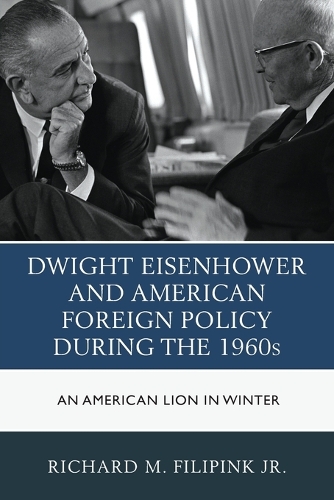
Книга Dwight Eisenhower and American Foreign Policy during the 1960s: An American Lion in Winter
Dwight Eisenhower had a measurable impact on the foreign policy decisions of his Democratic successors during the 1960s due to his reputation as a military and foreign policy expert as well as his continued popularity when and after he left office. Eisenhower sought to influence his successors’ policies for a number of reasons, including his underrated partisanship, his desire to protect the reputation of his administration, and his real concerns about the ability of his successors to successfully counter the communist challenge to American interests. Despite his steadily declining health, Eisenhower played both a public and behind-the-scenes role in shaping American foreign policy during the 1960s that had long-term consequences for the country. This book traces the interactions between Eisenhower and his two successors from the pre-inaugural meetings with John F. Kennedy, their direct contacts on Cuba, the use of intermediaries such as John McCone and General Andrew Goodpaster, and the constant contact initiated by Lyndon B. Johnson. Through these direct and indirect contacts, Eisenhower constrained the choices available to Kennedy and Johnson and shaped the politics and policies of the United States until the final months of his life.
"This slim, well-researched monograph concludes that former president Dwight D. Eisenhower (Ike) was a constraint on the foreign policy options available to John F. Kennedy and Lyndon B. Johnson during the 1960s. Believing Kennedy woefully inexperienced and Johnson too Machiavellian, Ike faulted both for often disregarding the Joint Chiefs of Staff. Nonetheless, Ike was reluctant to criticize their foreign policy initiatives publicly, except when his own administration came under attack, such as the bogus charge that a 'missile gap' had come into being during his watch with regard to the Soviet Union. Both out of respect and expediency, Kennedy and Johnson sought his counsel and advice, which tended to be more hawkish regarding Cuba, Berlin, Laos, and Vietnam than his own cautious actions while president. Though Ike adamantly opposed establishing diplomatic relations with China, neither Kennedy nor Johnson seriously considered such a course. . . .Ike’s popularity made him potentially a formidable foe, but for the most part the former general played the part of a good soldier and, except at election time, kept policy misgivings out of the public eye. Summing Up: Recommended. Graduate students/faculty." - CHOICE
"Filipink admirably describes Eisenhower’s interactions with Kennedy and Johnson concerning foreign policies. . . .Filipink deserves credit for writing an enlightening book on Eisenhower’s continuing influence during the Kennedy and Johnson administrations . . . Anyone wanting to study Eisenhower’s involvement in foreign and military policies in the 1960s should start here." - American Historical Review