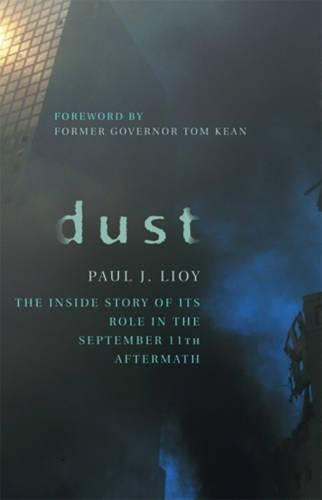
Книга Dust: The Inside Story of its Role in the September 11th Aftermath
One of the first scientists to take samples from Ground Zero after the destruction of the Twin Towers, Lioy shares his personal and professional perspectives on the World Trade Center dust. What was in the material that rained down after the disintegration of these buildings? Why did officials wrongly choose to focus on the release of asbestos? How did the size of the dust particles influence the development of the World Trade Center Cough among rescue workers and other New Yorkers? When were respirators used on site and what changes should be made to respirator design now? Dust answers these, and many other, questions about the environmental effects, public policy initiatives, health outcomes and scientific findings that played a critical role in the aftermath of September 11th. Beyond providing insightful analysis of what happened then, this book details the significant steps we need to take in order to better prepare for future catastrophes.
"Striving for public education, Lioy achieves his purpose for readers interested in the health effects of 9/11." - Booklist
"Making a mass of scientific data accessible to the general reader and adding his personal insights, Lioy presents an evenhanded account of a complex subject. Recommended for readers interested in the environmental issues of 9/11 as well as academic and public libraries, especially those with collections in exposure science and emergency management." - Library Journal
"Dust: The Inside Story of Its Role in the September 11th Aftermath provides a first-hand account of this country’s response to the environmental health threat following the 11 September 2001 (9/11) attack on the World Trade Center (WTC). This important story could not have been told with as great an understanding until now. The 9 ensuing years have allowed the emotional distance necessary for a thoughtful analysis, providing both perspective and the time needed for health effects from long and short-term exposures to be revealed....Lioy describes the successes and failures of this country’s environmental health science response in recognizing, evaluating, and controlling the threat to worker and community health....While focusing on the science, Lioy weaves in the political and human influences involved in allocating scarce resources amid complex stakeholder interests and participation, including community, union, academic, federal, state, and local organizations....It is apt that Lioy writes for a broad audience that might comprise scientists and nonscientists, policy makers and communities, graduate students and undergraduates....When the next environmental disaster occurs, thanks to Lioy and the many others like him who have worked tirelessly to evaluate and mitigate the WTC environmental health threat, our response will be quicker and better coordinated, grounded in a better understanding of the science, and ultimately more effective in minimizing risks to workers and communities. Lioy states that he wrote the book for his grandchildren, but the impact of his work will strike a much broader readership, both today and well into the future." - Environmental Health Perspectives
"Dust is an interesting, timely discussion of one investigator's findings concerning released particulate matter from the World Trade Center (WTC) in the aftermath of September 11th. After September 11th, it was widely known that the released particulate matter was toxic, but it was not known how toxic. Lioy (environmental and occupational medicine, Robert Wood Johnson Medical School) describes the circumstances and results of his efforts to investigate the extent of the toxicity of the particulate matter. Basic investigatory chapters include introductory material, aspects of dust collection, sample analysis, and a discussion on exposure. The book then discusses the presence of lead and other materials (e.g., chrysotile asbestos) in the WTC dust in the samples, and a discussion of unknowns. The final chapter is titled "Exposure Science in Future Catastrophes." Dust could be a very useful supplementary resource for courses intended to address homeland security or courses that are focused on exposure to airborne contaminants. Summing Up: Recommended. All levels/libraries." - CHOICE
"The author shares his personal and professional perspectives on the World Trade Center dust…that played a critical role in the aftermath of Sept. 11, 2001." - Chemical & Engineering News
"Ten years later, no one knows what was in the cloud of gases released by the combustion of all that jet fuel and building material but science has revealed what was in the dust—cement, steel, gypsum from drywall, building materials, cellulose from paper, synthetic molecules from rugs, glass fibers and human hair from the long decades of the two towers' use, among other items. "The [World Trade Center] dust held everything we consider near and dear to us," wrote Lioy, who carried out the first such analysis, in his book Dust: The Inside Story of Its Role in the September 11th Aftermath." - Scientific American