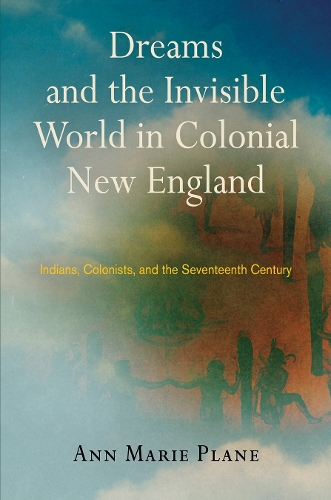
Книга Dreams and the Invisible World in Colonial New England: Indians, Colonists, and the Seventeenth Century
Ann Marie Plane explores the significance of dreams in seventeenth-century life. Touching on race, gender, emotions, and interior life, this book treats colonist and Indian experiences and analyzes both the content of the dreams themselves and the act of dream reporting.
From angels to demonic specters, astonishing visions to devilish terrors, dreams inspired, challenged, and soothed the men and women of seventeenth-century New England. English colonists considered dreams to be fraught messages sent by nature, God, or the Devil; Indians of the region often welcomed dreams as events of tremendous significance. Whether the inspirational vision of an Indian sachem or the nightmare of a Boston magistrate, dreams were treated with respect and care by individuals and their communities. Dreams offered entry to "invisible worlds" that contained vital knowledge not accessible by other means and were viewed as an important source of guidance in the face of war, displacement, shifts in religious thought, and intercultural conflict.
Using firsthand accounts of dreams as well as evolving social interpretations of them, Dreams and the Invisible World in Colonial New England explores these little-known aspects of colonial life as a key part of intercultural contact. With themes touching on race, gender, emotions, and interior life, this book reveals the nighttime visions of both colonists and Indians. Ann Marie Plane examines beliefs about faith, providence, power, and the unpredictability of daily life to interpret both the dreams themselves and the act of dream reporting. Through keen analysis of the spiritual and cosmological elements of the early modern world, Plane fills in a critical dimension of the emotional and psychological experience of colonialism.
"With a fresh interpretation of an understudied phenomenon, this book makes important contributions to the history of cultural contact, the history of lived religion in Puritan New England, gender studies, and the nascent field of history of the emotions and interior states of subjectivity." - Susan Juster, University of Michigan, Ann Arbor
"A fine work of scholarship. Plane makes a significant contribution to Native American historiography, offering a uniquely fine-grained assessment of the worldview of Native New Englanders and English settlers, whose lives were not separate but intricately entangled." - Matthew Dennis, University of Oregon