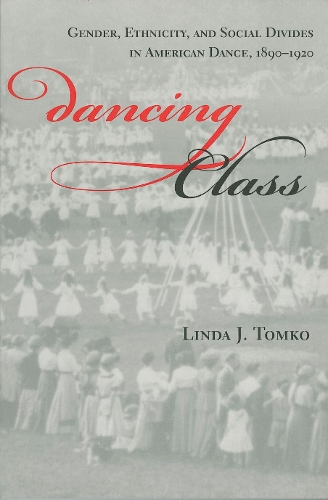
Книга Dancing Class: Gender, Ethnicity, and Social Divides in American Dance, 1890-1920
Explores Progressive-era dance practices as an instrument for negotiating cultural and gender issues
A Choice Outstanding Academic Book of 2000
"Tomko blazes a new trail in dance scholarship by interconnecting U.S. History and dance studies. . . . the first to argue successfully that middle-class U.S. women promoted a new dance practice to manage industrial changes, crowded urban living, massive immigration, and interchange and repositioning among different classes." —Choice
From salons to dance halls to settlement houses, new dance practices at the turn of the century became a vehicle for expressing cultural issues and negotiating matters of gender. By examining master narratives of modern dance history, this provocative and insightful book demonstrates the cultural agency of Progressive-era dance practices.
"
Tomko (Univ. of California, Riverside) blazes a new trail in dance scholarship by interconnecting US history and dance studies. Using analyses of class, gender, and ethnicity, she focuses on dance as a vehicle for cultural intervention in Progressive-era America, as manifested in immigration, physical culture movement, and the settlement projects. Others have concentrated on the art dancer as precursor to US modern dance, but Tomko is the first to argue successfully that middle-class US women promoted a new dance practice to manage industrial changes, crowded urban living, massive immigration, and interchange and repositioning among different classes. They blended foreign and US cultural practices and negotiated gender issues in education, social work, dance hall reforms, dance innovations, and dance patronage. Tomko links post-WW I immigration laws, shifting gender roles, and Freudian theories to the motivation of modern dancers to reject the derived conventionalized 'foreign' materials of the Progressive era. In so doing the author rewrites the history of 20th-century US dance, showing that the Progressive-era dance practices made significant cultural interventions in past US history and suggest relevant questions for the future. Annotated endnotes, bibliography, collections consulted, and index enhance the value of this rich book. All academic and general collectionNovember 2000
" - Goucher College