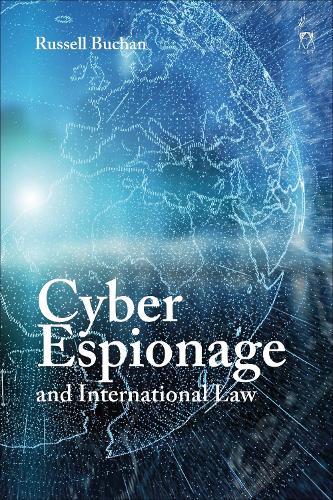
Книга Cyber Espionage and International Law
The overarching research objective of this book is to critically examine the protection afforded by international law to state and non-state actors from cyber espionage.
The advent of cyberspace has led to a dramatic increase in state-sponsored political and economic espionage. This monograph argues that these practices represent a threat to the maintenance of international peace and security and assesses the extent to which international law regulates this conduct. The traditional view among international legal scholars is that, in the absence of direct and specific international law on the topic of espionage, cyber espionage constitutes an extra-legal activity that is unconstrained by international law. This monograph challenges that assumption and reveals that there are general principles of international law as well as specialised international legal regimes that indirectly regulate cyber espionage. In terms of general principles of international law, this monograph explores how the rules of territorial sovereignty, non-intervention and the non-use of force apply to cyber espionage. In relation to specialised regimes, this monograph investigates the role of diplomatic and consular law, international human rights law and the law of the World Trade Organization in addressing cyber espionage. This monograph also examines whether developments in customary international law have carved out espionage exceptions to those international legal rules that otherwise prohibit cyber espionage as well as considering whether the doctrines of self-defence and necessity can be invoked to justify cyber espionage. Notwithstanding the applicability of international law, this monograph concludes that policymakers should nevertheless devise an international law of espionage which, as lex specialis, contains rules that are specifically designed to confront the growing threat posed by cyber espionage.
"[M]any legal scholars suggest that espionage is neither legal nor illegal under international law. Cyber Espionage and International Law is a strong and well-supported rebuttal of this interpretation… [E]ssential reading for anyone interested in understanding or tasked with interpreting the scope of the CSE’s new powers in light of existing international law." - Canadian Yearbook of International Law
"Buchan is not afraid to express his opinion on a number of issues throughout the monograph and the decisive, well supported and justified stance that he takes in relation to how international law rules apply to state cyber espionage is one of the unique features of this book… There is no doubt that the monograph is an important and sound contribution to the existing debate on these issues and will serve as a valuable tool to those who are new to this area of law together with the experts keen to explore the evolution of the legal regimes applicable to state cyber espionage activities." - Journal of Conflict and Security Law
"There is much of interest and a wealth of material here... Cyber-espionage as a topic, however much avoided in polite company in the past, now more than ever needs to be subject to proper analytical discourse. This book provides a significant and rigorous contribution to that intellectual debate." - Leiden Journal of International Law
"Cyber Espionage and International Law is one of the most important and complete works on cyber espionage in international scholarship, and it will be studied and analysed for many years in the future to understand the complex relationship between cyber espionage and a number of international law rules. The book’s compelling arguments, its fresh and frank style, and its sound knowledge of international law rules make this monograph a fascinating and pleasant read." - Israel Law Review
"Buchan’s book offers a comprehensive study of the ‘patchwork of norms’ applicable to cyber espionage. This book, through the lenses of the dawn of cyberspace, offers a fresh look at the question relating to the international legal framework applicable to espionage. I highly recommend this book for those who are interested in cyber espionage, and more broadly in how the development of ICTs affects existing international law." - German Yearbook of International Law