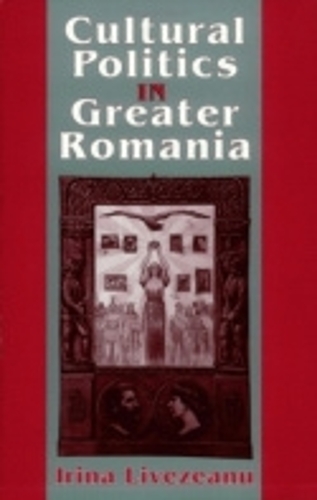
Winner of the 1995 Heldt Prize given by the Association for Women in Slavic Studies and a 1995 "Choice" Outstanding Academic Book.
Since the fall of the Ceausescu regime, Romanian politics have been haunted by unresolved issues of the past. Irina Livezeanu examines a critical chapter in Eastern European history—the trajectory of the aggressive nationalism that dominated Romania between the world wars.
"
Irina Livezeanu's excellent book on interwar Romania should be assigned as compulsory reading to all those who, in their understandable disdain for the Communist abuses of the past forty-five years, yearn for the 'good old days.'... Her masterful account... highlights once again how hateful a place East Central Europe was to the Jews, and how the pre-Communist past should be anything but extolled or emulated by contemporary intellectuals and politicians.
" - Austrian History Yearbook, 1997
"
Only since the fall of Ceausescu have Romanians been able to attempt a reconstruction of their recent past and to interrogate it.... Dr. Livezeanu's book is one of great relevance for an understanding of nation-building in the contemporary world. It is the first major work in any language on the efforts by Romanian governments to harmonize the divergent groups in the newly-annexed terrorities and to consolidate the young state.
" - Slavonic Review