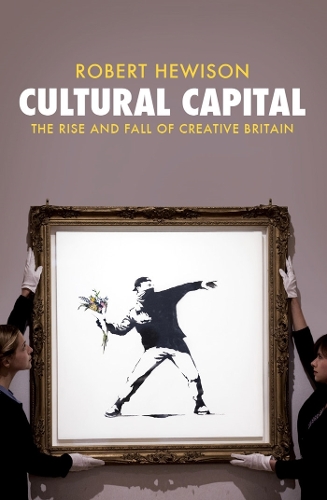
How money, politics and managerialism turned a golden age for culture into lead
Britain began the twenty-first century convinced of its creativity. Throughout the New Labour era, the visual and performing arts, museums and galleries, were ceaselessly promoted as a stimulus to national economic revival, a post-industrial revolution where spending on culture would solve everything, from national decline to crime. Tony Blair heralded it a "golden age." Yet despite huge investment, the audience for the arts remained a privileged minority. So what went wrong?
In Cultural Capital, leading historian Robert Hewison gives an in-depth account of how creative Britain lost its way. From Cool Britannia and the Millennium Dome to the Olympics and beyond, he shows how culture became a commodity, and how target-obsessed managerialism stifled creativity. In response to the failures of New Labour and the austerity measures of the Coalition government, Hewison argues for a new relationship between politics and the arts.
"Hewison's analysis of how a golden age turned to lead is highly authoritative, well argued & conceptually robust." - Guardian
"I could hardly put it down: so forceful, lucid, objective, blackly funny, deeply depressing and URGENTLY NECESSARY." - Daily Telegraph