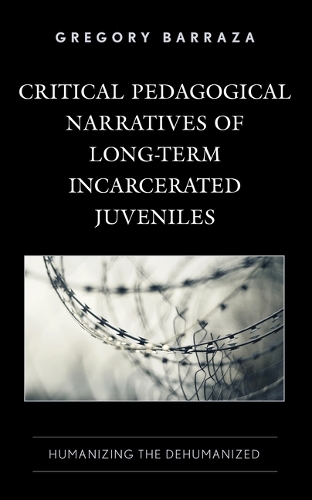
Книга Critical Pedagogical Narratives of Long-Term Incarcerated Juveniles: Humanizing the Dehumanized
Little research or curriculum design has been done for the purpose of improving juvenile postsecondary correctional education and limiting recidivism rates of students in the juvenile justice system. Using short fictive narratives and poetry by currently and formerly incarcerated juveniles, Critical Pedagogical Narratives of Long-Term Incarcerated Juveniles: Humanizing the Dehumanized provides an in-depth look at influences that affect their trajectory on the School to Prison Pipeline, and how their experiences interrelate with their educational experience. Gregory Barraza takes a critical look at the absence of one of the most important elements to juvenile justice education often gets overlooked: humanization of the dehumanized. So often, students on the school to prison pipeline and in juvenile justice education fall into the most marginalized sector of education. They are frequently overlooked regarding mental health services and academic services. This book shows that our justice impacted juveniles have a voice and have needs that go overlooked. The students’ voice gives insight on the students’ life experience and how that experience led them to correctional education. Once we know their “voice” we can give them the necessary educational path that deters from recidivism and a “doing life one day at a time.”
"
Arrests and residential confinement of juveniles dropped by more than half between the mid-1990s and the present, but the US still leads the world in incarcerating youth under age 18. A common model used in the juvenile justice field is the school-to-prison pipeline, which observes that a disproportionate number of young people from disadvantaged backgrounds become incarcerated due to harsh disciplinary policies in schools. Barraza addresses this head on by reporting on his work with incarcerated juveniles. After listening to their life stories and encouraging these youth to write about their experiences, his conclusions about how they become disengaged and disenchanted with school because of how they are treated by authority figures and the many traumatic circumstances they face in life are especially significant. Using a critical pedagogical method in combination with an arts-based research method, Barraza gives voice to these young people by talking to them and jointly authoring short fictional pieces and poetry that illustrate the conscious and unconscious aspects of their lives. He ends the book with a set of trenchant policy prescriptions fashioned to disrupt the school-to-prison pipeline and humanize disadvantaged youth. Highly recommended. Graduate students, faculty, and professionals.
" - Choice Reviews