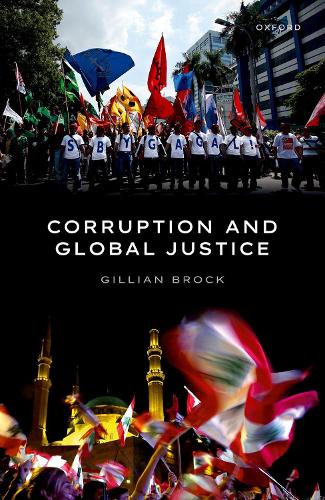
Книга Corruption and Global Justice
Corruption is a pervasive problem across the world and is regularly ranked as among the greatest global challenges. Considering the role that corruption plays in exacerbating deprivation and fuelling social tension, peaceful and just societies are unlikely to come about without tackling corruption. Addressing corruption should be a high priority for those concerned with poverty eradication, peace, security, and justice. Yet, curiously, corruption has not yet been the focus of any books by philosophers working on global justice topics. Corruption and Global Justice does so. Author Gillian Brock offers a normatively justified account of how to allocate responsibilities for addressing corruption across the many agents who can and should play a role. In order to know who should take responsibility and how they should do so, we need to understand multiple forms of corruption, the corruption risks associated with various activities, the interventions that tackle corruption effectively, and current policy and legal frameworks in place for addressing corruption. In addition, Brock proposes a new framework for navigating responsibility to address injustice, one that is action-oriented and forward-looking. Adopting an agent-empowering approach and harnessing the power of joining forces in effective collective action, Corruption and Global Justice addresses a significant global problem in a comprehensive way, providing the tools we need for progress as we collaborate to tackle this global scourge.
"Brock's book is both normative and descriptive/empirical. She presents a wide account of corruption and provides an argument as to what should be done in response to it and who should do these things...Brock deserves credit for bringing the UNCAC, various multistakeholder initiatives, and civil society programs for addressing corruption to the attention of philosophers." - Matthew Lister, Ethics
"Gillian Brock's Corruption and Global Justice is an impressively encompassing yet concise work that puts forth a compelling argument as to why addressing corruption is a necessary condition for realizing human rights and achieving the goals of global justice, despite being a problem largely overlooked by academics and actors working towards such goals...Uniquely persuasive in her empirically informed normative methodology are the solutions offered for addressing corruption that work within existing frameworks and human rights practices, and the multi-level approach to assigning such responsibilities, including both remedial and forward-looking responsibilities." - Philosophy in Review