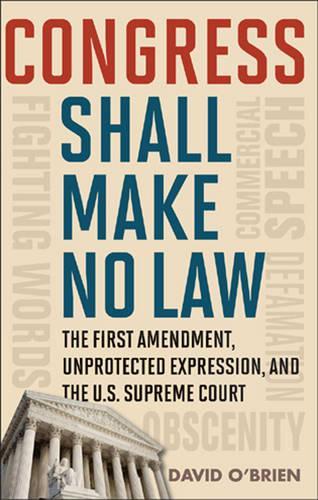
The First Amendment declares that 'Congress shall make no law . . . abridging the freedom of speech, or of the press. . . . ' Yet, in the following two hundred years, Congress and the states have sought repeatedly to curb these freedoms. The Supreme Court of the United States in turn gradually expanded First Amendment protection for freedom of expression but also defined certain categories of expression_obscenity, defamation, commercial speech , and 'fighting words' or disruptive expression-as constitutionally unprotected. From the Alien and Sedition Act of 1798 to the most recent cases to come before the Supreme Court, noted legal scholar David M. O'Brien provides the first comprehensive examination of these exceptions to the absolute command of the First Amendment, providing a history of each category of unprotected speech and putting into bold relief the larger questions of what kinds of expression should (and should not) receive First Amendment protection. O'Brien provides readers interested in civil liberties, constitutional history and law, and the U. S. Supreme Court a treasure trove of information and ideas about how to think about the First Amendment.
"A succinct and scholarly book…. both informative and provocative….In addition to providing a good read, the book is well suited for consideration by a book discussion group." - Sunday Star Ledger, September 26, 2010
"In Congress Shall Make No Law David O'Brien, the Leone Reaves and George W. Spicer Professor at the University of Virginia, provides a handy and insightful...precis of the Supreme Court's jurisprudence.... It remains an excellent summary of a complicated area of law." - American Review of Politics