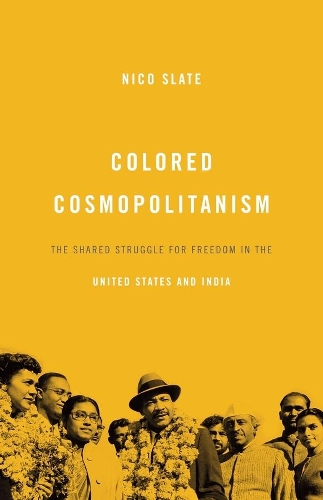
Книга Colored Cosmopolitanism: The Shared Struggle for Freedom in the United States and India
A hidden history connects India and the United States, the world’s two largest democracies. From the late nineteenth century through the 1960s, activists worked across borders of race and nation to push both countries toward achieving their democratic principles. At the heart of this shared struggle, African Americans and Indians forged bonds ranging from statements of sympathy to coordinated acts of solidarity. Within these two groups, certain activists developed a colored cosmopolitanism, a vision of the world that transcended traditional racial distinctions. These men and women agitated for the freedom of the “colored world,” even while challenging the meanings of both color and freedom.
“Slate exhaustively charts the liberation movements of the world’s two largest democracies from the 19th century to the 1960s. There’s more to this connection than the Rev. Martin Luther King Jr.’s debt to Mahatma Gandhi, and Slate tells this fascinating tale better than anyone ever has.”
—Tony Norman, Pittsburgh Post-Gazette
“Slate does more than provide a fresh history of the Indian anticolonial movement and the U.S. civil rights movement; his seminal contribution is his development of a nuanced conceptual framework for later historians to apply to studying other transnational social movements.”
—K. K. Hill, Choice
"One of the most fascinating releases of 2012 was Colored Cosmopolitanism, Nico Slate’s exhaustive history of the ties between the American civil rights movement and India’s inexorable march toward democracy from the 19th century through the 1960s… The dialogue between African-Americans and South Asians chronicled in Colored Cosmopolitanism is one of the great untold stories of the 20th century." - Pittsburgh Post-Gazette
"Slate exhaustively charts the liberation movements of the world’s two largest democracies from the 19th century to the 1960s. There’s more to this connection than the Rev. Martin Luther King, Jr.’s debt to Mahatma Gandhi, and Slate tells this fascinating tale better than anyone ever has." - Pittsburgh Post-Gazette
"Since the mid-1990s, U.S. scholars have sought to understand the international factors that shaped the U.S. civil rights movements. Within the last decade, transnational studies of the civil rights and Black Power movements have emerged and emphasized the connections between black activists within the African diaspora. Slate breaks new ground by unearthing a ‘hidden history’ of solidarity between anticolonial activists in India and black civil rights activists in the U.S. during the 20th century. The author argues that Indian and black activists were able to transcend physical distance, differing sociohistorical environments, and racial difference (albeit imperfectly) through a shared vision of ‘global double victory’ for the ‘darker races.’ Slate does more than provide a fresh history of the Indian anticolonial movement and the U.S. civil rights movement; his seminal contribution is his development of a nuanced conceptual framework for later historians to apply to studying other transnational social movements." - Choice
"From the late 19th to the mid-20th century, Indians and African-Americans found common ground in their fights against colonialism on one side of the world and racism on the other… Gandhi’s influence on Martin Luther King, Jr., the most celebrated of his disciples of non-violence, garners surprisingly few pages here. Instead of traveling down this well-trod path, the author delves deeper into how Gandhi’s African-American contemporaries, such as civil rights stalwarts Booker T. Washington and W.E.B. Du Bois influenced the Indian leader, precipitating a profound reworking of his thinking on both caste and race. Engagingly written, this sweeping account of these episodes in U.S. and Indian history has the ability to appeal to professional historians as well as general readers." - Publishers Weekly