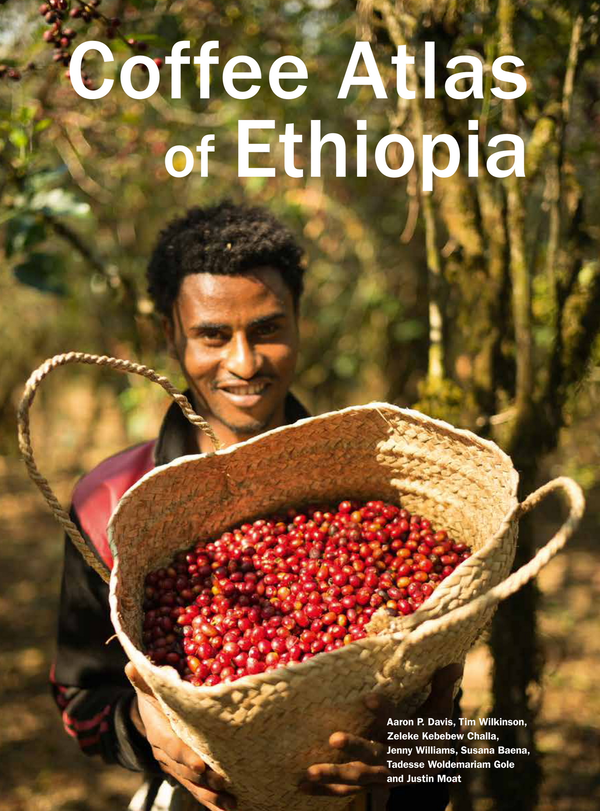
Книга Coffee Atlas of Ethiopia
• Chapters cover coffee use and consumption, botany of Arabica, the coffee climate, agroecology, coffee farming, harvesting and processing, and geographical overview
• Detailed 40 page atlas with keys to roads and rail, coffee delivery centres, coffee towns and key coffee growing localities. Regions of coffee suitability and protected areas are also indicated.
• Atlas gazetteer
• Fully illustrated throughout with colour photographs
• Coffee information aside, the maps of the region are the most accurate published to date! This richly illustrated volume is the first complete atlas of coffee production in Ethiopia, birth-place of coffee drinking and the main home of wild arabica coffee (Coffea arabica). Around 15 million Ethiopians are coffee farmers, and Ethiopia is Africa’s largest coffee producer and one of the most important coffee-growing regions of the world, renowned for its diversity of flavour profiles, including those of the celebrated coffees of Harar, Limu, Sidamo, and Yirgacheffe. The aim of the Coffee Atlas of Ethiopia is to inform the reader about the coffee landscape of Ethiopia. It shows where coffee is grown, where the natural coffee forests are located, and where coffee could be grown. The atlas maps are accompanied by information on coffee farming, environment and climate, and a description of the main coffee areas. Also included in the atlas are key coffee origins, coffee towns and coffee delivery centres, as well as other useful items. The atlas can be used to assess the potential and vulnerability for coffee farming in Ethiopia, as well as provide a logistics resource for the coffee sector and those otherwise working with, or interested in, coffee. It is also an essential reference for resource managers.