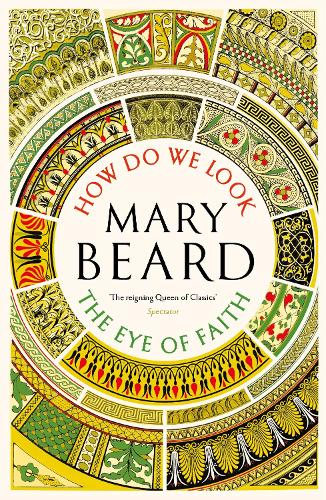
Книга Civilisations: How Do We Look / The Eye of Faith
An unmissable tour through art and time with the most renowned classicist of today, Mary Beard
'The reigning Queen of Classics' Spectator What are civilisations? At the heart of this big question is how people have depicted the human and divine, from prehistory to the present day. Britain's most famous classicist Mary Beard asks: how have we portrayed ourselves in some of the world's earliest art? Why have these images sometimes been so contentious? In time for the 55th anniversary airing of Kenneth Clark's Civilisation, Beard explores gigantic stone heads carved by the Olmec in Central America, the statues and pottery of the ancient Greeks, and the first emperor of China's terracotta army. And she explains how one ancient representation of the human body still influences (or distorts) how people in the West see their own culture, and that of others. From Angkor Wat to the Ravenna mosaics and exquisite calligraphy of Islamic mosques, all religions have wrestled with idolatry and iconoclasm. Throughout this story, Beard is concerned not only with the artists who made art, but with those who have used, viewed, or interpreted it - and asked how to look with The Eye of Faith.
"Excellent ... an invigorating guide" - Guardian
"Beautifully produced and elegantly written ... utterly compelling" - Irish Times
"[Beard] has always had the sharpest eyes for telling detail and colourful anecdote" - Sunday Times
"The rock star scholar of Ancient Rome" - Financial Times
"With such a champion as Beard to debunk and popularise, the future of the study of classics is assured" - Daily Telegraph
"The reigning Queen of Classics" - Spectator
"Slim yet insightful. . . . Beard expands her view beyond western Europe to offer an admirable survey of cultures from Egypt to China, Judaism to Christianity, centuries past to the modern era, all while emphasizing the significance of the viewer over the artist. . . . As Beard emphasizes the power of the context in which we look at and interpret art, she ultimately suggests that civilization itself is a leap of faith. Beard is having fun in this joyfully accessible primer, backed with a robust appendix, for all interested in a new perspective on religion, art, and history." - Booklist
"Praise for Mary Beard: What she says is always powerful and interesting" - Guardian
"An irrepressible enthusiast with a refreshing disregard for convention" - Financial Times
"If they'd had Mary Beard on their side back then, the Romans would still have their empire" - Daily Mail
"[She] implicitly invites us to think about our own world, and about our answers to the question of what makes us human" - Sydney Morning Herald
"Praise for SPQR: Fast-moving, exciting, psychologically acute, warmly sceptical" - Sunday Times
"Vastly engaging ... a tremendously enjoyable and scholarly read" - Observer
"Sustaining the energy that such a topic demands for more than 600 pages, while providing a coherent answer to the question of why Rome expanded so spectacularly, is hugely ambitious. Beard succeeds triumphantly ... full of insights and delights ... SPQR is consistently enlivened by Beard's eye for detail and her excellent sense of humour" - Sunday Times
"Masterful ... This is exemplary popular history, engaging but never dumbed down, providing both the grand sweep and the intimate details that bring the distant past vividly to life" - Economist
"Ground-breaking ... invigorating ... revolutionary ... a whole new approach to ancient history" - Spectator