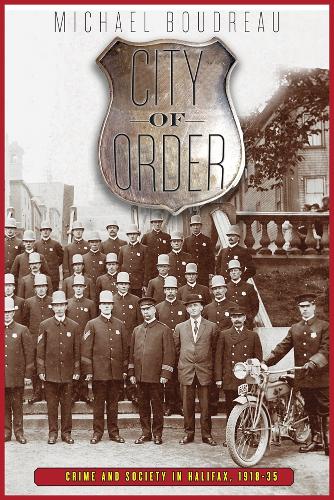
An in-depth investigation of how Halifax faced the challenges of modernity by mounting a war on crime.
Interwar Halifax was a city in flux, a place where citizens debated adopting new ideas and technologies but agreed on one thing – modernity was corrupting public morality and unleashing untold social problems on their fair city.
In this context, citizens, policy makers, and officials turned to the criminal justice system to create a bulwark against further social dislocation. Officials modernized the city’s machinery of order – courts, prisons, and the police force – and placed greater emphasis on crime control, while residents supported tough-on-crime measures and attached little importance to rehabilitation. These initiatives gave birth to a constructed vision of a criminal class that singled out ethnic minorities, working-class men, and female and juvenile offenders as problem figures in the eternal quest for order.
Michael Boudreau’s in-depth study of crime and culture in interwar Halifax, the first of its kind, shows how tough-on-crime measures can compound, rather than resolve, social inequalities and dislocations.
"
For determined popular readers as well as serious scholars, Boudreau’s book is worth plowing through to acquire an in-depth understanding of crime and working-class culture in interwar Halifax. It is even more valuable as a reminder that tough-on-crime policies can actually compound rather than ease social inequalities, racial divisions and economic hardship for the most vulnerable in urban societies.
" - The Chronicle Herald, Halifax