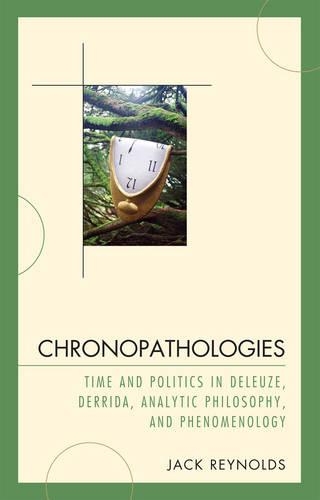
Книга Chronopathologies: Time and Politics in Deleuze, Derrida, Analytic Philosophy, and Phenomenology
"Jack Reynolds' insightful essays demonstrate the importance as well as the difficulty of thinking across the metaphilosophical borders that separate phenomenology, poststructuralism and analytic philosophy. They develop a compelling case for the deficiencies of each, from the perspective of the others, in relation to their respective approaches to time and suggest ways in which each can learn from the others. This book both calls for and exemplifies genuine conversation between analytic and continental philosophy."--Paul Patton, The University of New South Wales
A battle over the politics (and philosophy) of time is a major part of what is at stake in the differences between three competing currents of contemporary philosophy: analytic philosophy, post-structuralist philosophy, and phenomenological philosophy. Avowed or tacit philosophies of time define representatives of each of these groups and also guard against their potential interlocutors. However, by bringing the temporal differences between these philosophical trajectories to the fore, and showing both their methodological presuppositions and their ethico-political implications, this book begins a long overdue dialogue on their respective strengths and weaknesses. It argues that there are systemic temporal problems (chronopathologies) that afflict each, but especially the post-structuralist tradition (focusing on Gilles Deleuze and Jacques Derrida and their prophetic future politics) and the analytic tradition (focusing on John Rawls and philosophical methodology in general, particularly the tendency to oscillate between forms of atemporality and intuition-oriented “presentism”). What is required is a “middle-way” that does not treat the living-present and the pragmatic temporality associated with bodily coping as an epiphenomenon to be explained away as either a transcendental illusion (and as a reactive force that is ethically problematic), or as a subjective/psychological experience that is not ultimately real.
"In Chronopathologies, the Australian philosopher Jack Reynolds gives an exciting analysis of the intimate connection between time and politics in three trajectories of contemporary philosophy: analytic philosophy, poststructuralism and phenomenology. Reynolds makes an important contribution to the philosophical study of time. He convincingly shows that the analytic and continental branches of philosophy need each other to become aware of the temporal and normative biases that bedevil them." - International Journal of Philosophical Studies