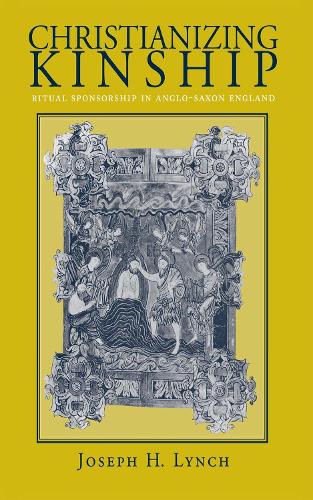
Книга Christianizing Kinship: Ritual Sponsorship in Anglo-Saxon England
When Christianity spread from its Mediterranean base into the Germanic and Celtic north, it initiated profound changes, particularly in kinship relations and sexual mores. Joseph H. Lynch traces the introduction and assimilation of the concept of spiritual kinship into Anglo-Saxon England. Covering the years 597 to 1066, he shows how this notion unsettled and in time altered the structures of the society.
In early Germanic societies, kinship was a major organizing principle. Spiritual kinship of various kinds began to take hold among the Anglo-Saxons with the arrival of Christian missionaries from Rome in the seventh century. Lynch discusses in detail sponsorship at baptism, confirmation, and other rituals in which an individual other than a biological parent presented someone, often an infant, for initiation into Christianity. After the ceremony, the sponsor was regarded as the child's spiritual parent or godparent, whose role complemented that of the natural mother and father, with whom the sponsor had become a "coparent." He describes the difficulties posed by the incest taboo, which included a ban on marriage between spiritual kin. Lynch's work reveals how Anglo-Saxons, though never accepting the sexual taboos that were so prominent in the Frankish, Roman, and Byzantine churches, did create new forms of spiritual kinship. Unusual in its focus and scope, this book illuminates an integral element in the religious, social, and diplomatic life of Anglo-Saxon England. It also contributes to our understanding of the ways in which Christianization reshaped societal relations and moral attitudes.
When Christianity spread from its Mediterranean base into the Germanic and Celtic north, it initiated profound changes, particularly in kinship relations and sexual mores. Joseph H. Lynch traces the introduction and assimilation of the concept of spiritual kinship into Anglo-Saxon England. Covering the years 597 to 1066, he shows how this notion unsettled and in time altered the structures of the society.In early Germanic societies, kinship was a major organizing principle. Spiritual kinship of various kinds began to take hold among the Anglo-Saxons with the arrival of Christian missionaries from Rome in the seventh century. Lynch discusses in detail sponsorship at baptism, confirmation, and other rituals in which an individual other than a biological parent presented someone, often an infant, for initiation into Christianity. After the ceremony, the sponsor was regarded as the child's spiritual parent or godparent, whose role complemented that of the natural mother and father, with whom the sponsor had become a "coparent." He describes the difficulties posed by the incest taboo, which included a ban on marriage between spiritual kin. Lynch's work reveals how Anglo-Saxons, though never accepting the sexual taboos that were so prominent in the Frankish, Roman, and Byzantine churches, did create new forms of spiritual kinship. Unusual in its focus and scope, this book illuminates an integral element in the religious, social, and diplomatic life of Anglo-Saxon England. It also contributes to our understanding of the ways in which Christianization reshaped societal relations and moral attitudes.
"
Impressive.... Lynch provides the reader with a thorough context for what was happening simultaneously on the Continent. The book is highly recommended for advanced undergraduates or above who would like a lucid survey of the connections between baptismal customs and ritual sponsorship in Anglo-Saxon England.
" - History"
Lynch is a lawyer as well as a historian. He is, in fact, a superb narrative stylist.
" - The Detroit News"
This new volume is a valuable study and a 'good read.' It is rich in its sensitivity to the many layers of and currents flowing within the sociopolitical context of seventh century conversion enterprises.... It will take its place on the basic shelf for discussions of early medieval society and church. It is also—last but hardly least—rich with ideas that can be taken into the (undergraduate) classroom; baptism, confirmation, and marriage patterns are still with us.
" - American Historical Review