Книга Choral Treatises and Singing Societies in the Romantic Age
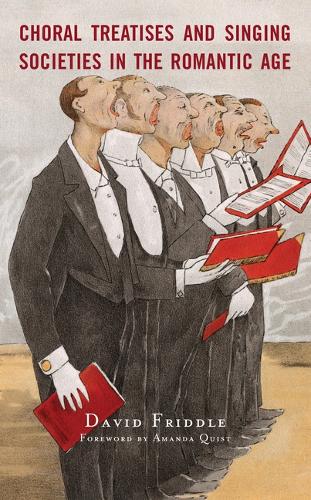
Choral Treatises and Singing Societies in the Romantic Age charts the interrelated beginning and development of choral methods and community choruses beginning in the early nineteenth century. Using more than one-hundred musical examples, illustrations, tables, and photographs to document this phenomenon, author David Friddle writes persuasively about this unusual tandem expansion. Beginning in 1781, with the establishment of the first secular singing group in Germany, Friddle shows how as more and more choral ensembles were founded throughout Germany, then Europe, Scandinavia, and North America, the need for singing treatises quickly became apparent. Music pedagogues Hans Georg Nägeli, Michael Traugott Pfeiffer, and Johann Heinrich Pestalozzi invented the genre that became modern choral methods; initially these books were combinations of music fundamental primers, with frequent inclusion of choral works intended for performance. Eventually authors branched out into choral conducting textbooks, detailed instructions on how to found such a community-based organization, and eventually classroom music instruction. The author argues that one of the greatest legacies of this movement was the introduction of vocal music education into public schools, which led to greater musical literacy as well as the proliferation of volunteer choirs. All modern choral professionals can find the roots their career during this century.
"
Friddle presents a history of 19th-century choral treatises and discusses the singing societies that such works supported. Sharing the joint goals of teaching music literacy and building choral ensembles, numerous treatises were written starting in the Romantic age, beginning with Michael Pfeiffer and Hans Georg Nägeli’s Vocal Training according to Pestalozzian Principles (1810) and including works by Joseph Mainzer, Andreas Rützel, John Spencer Curwen, Lowell Mason, and many others. With industrialization, workers moved from rural areas to cities where higher wages and more leisure time helped to support the development of choral societies. Participants, first men and later both men and women, joined these groups and devoted serious attention to choral singing. Starting with the first significant choral society, the Sing-Akademie in Germany, Friddle traces the propagation of such groups to other European countries. Crossing the Atlantic, Friddle discusses the freed enslaved people who founded Fisk University and formed the Fisk Jubilee Singers in the 1870s, and the 19th-century singing-school movement, which provided a strong foundation for the singing societies that followed. In the absence of recordings, these choral treatises provide some idea of how 19th-century choruses sounded, as well as inspiration for modern choral directors. Recommended. Upper-division undergraduates through faculty; professionals.
" - Choice Reviews