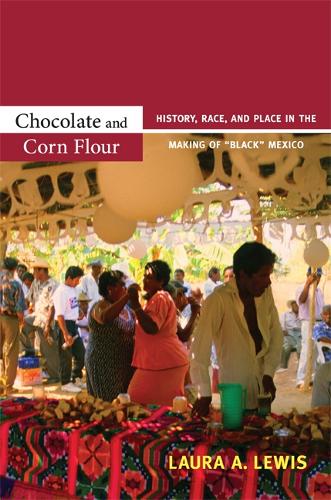
Книга Chocolate and Corn Flour: History, Race, and Place in the Making of "Black" Mexico
Anthropologist Laura Lewis explores the lives and self-understanding of Mexicans of African descent living in the agricultural village of San Nicolas on the Pacific coast of Mexico. In recent years, the area has been described by anthropologists, journalists, and activists as the cradle of Afro-Mexican culture, but residents call themselves Moreno or mixed black-Indians, neither denying their blackness nor identifying as Afro-Mexicans. Lewis argues for attending to local forms of race as she describes the conflicts between outsider investments and those of the residents. The last chapter follows some of the residents who have settled around Winston-Salem, but maintain their ties to the village.
Located on Mexico's Pacific coast in a historically black part of the Costa Chica region, the town of San Nicolás has been identified as a center of Afromexican culture by Mexican cultural authorities, journalists, activists, and foreign anthropologists. The majority of the town's residents, however, call themselves morenos (black Indians). In Chocolate and Corn Flour, Laura A. Lewis explores the history and contemporary culture of San Nicolás, focusing on the ways that local inhabitants experience and understand race, blackness, and indigeneity, as well as on the cultural values that outsiders place on the community and its residents.
Drawing on more than a decade of fieldwork, Lewis offers a richly detailed and subtle ethnography of the lives and stories of the people of San Nicolás, including community residents who have migrated to the United States. San Nicoladenses, she finds, have complex attitudes toward blackness—as a way of identifying themselves and as a racial and cultural category. They neither consider themselves part of an African diaspora nor deny their heritage. Rather, they acknowledge their hybridity and choose to identify most deeply with their community.
"“This delightful book, based on well over a decade of research in Mexico and the United States . . . traces the history and social relations of a self-described moreno community from the colonial period to its contemporary diasporic dispersal to the United States.”" - American Ethnologist
"“As Lewis takes us, along with the people she has studied, to the edge of the present and before a tentative future, she maintains a narrbative richly textured with research and detail yet poignant and engagingly clear in its composition.”" - Hispanic American Historical Review
"“This ambitious ethnography…. presents a very useful history of the Costa Chica region that specialists will relish. The book also includes a well-researched discussion of the anthropological work of central pioneers in the field of Afro-Mexican studies…. Where Lewis most successfully brings to bear her wealth of experience in the region is in her discussions of transmigration and the persistence of family ties despite the economic challenges that often separate families across borders.”" - Journal of Anthropological Research