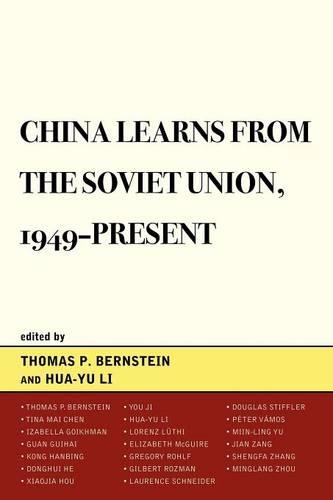
In this book an international group of scholars examines China's acceptance and ultimate rejection of Soviet models and practices in economic, cultural, social, and other realms.
"This book is a fantastic resource for professors and students alike. It is a major work that will help scholars around the world to better understand the Soviet model's enduring legacy and how it affected and will continue to affect modern China." - China Quarterly
"The book contains a wealth of interesting and cogently presented perspectives on the Sino-Soviet relationship. It is highly recommended for both the specialist and the general reader." - The China Journal
"Although this tale of less than brotherly love is a familiar one, this volume provides a wealth of detail based on extensive field research and archival work, explaining exactly how, what, and why China borrowed from Soviet experience. Resulting from a 2007 international conference involving established scholars and younger researchers, the volume also goes well beyond conventional wisdom in the study of Sino-Soviet alliance relations to address the complex set of circumstances that set limits to Chinese emulation and to the Sino-Soviet relationship itself." - Slavic Review
"A sample of the soul-searching going on in Chinese academic circles about the reasons for the collapse of the Soviet Union, a subject that deserves greater attention for what it tells us about Chinese thinking regarding China’s own current political and economic challenges." - Slavic Studies