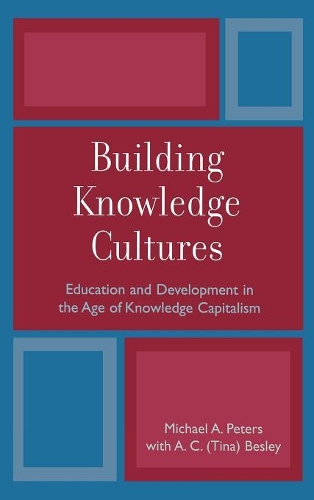
Книга Building Knowledge Cultures: Education and Development in the Age of Knowledge Capitalism
This book develops the notion of 'knowledge cultures' as a basis for understanding the possibilities of education and development in the age of knowledge capitalism. 'Knowledge cultures' refers to the cultural preconditions in the new production of knowledge and their basis in shared practices, embodying preferred ways of doing things often developed over many generations. These practices also point to the way in which cultures have different repertoires of representational and non-representational forms of knowing. The book discusses knowledge cultures in relation to claims for the new economy, as well as cultural economy and the politics of postmodernity. It focuses on national policy constructions of the knowledge economy, 'fast knowledge' and the role of the so-called 'new pedagogy' and social learning under these conditions.
"Building Knowledge Cultures is perhaps one of the richest, philosophically oriented works to come along in quite some time-at least in the arena of higher education and development. [It] is an in-depth theoretical resource that goes to great lengths in elaborating key constructs and concerns linked to the knowledge economy, development, and the role of education. The 10 chapters (plus an "Introduction" and a "Postscript") are theoretically and conceptually illuminating, grounded to some extent in practical policy decisions and strategies. Overall, we see Building Knowledge Cultures as one of the more significant works on the new knowledge economy and the relevance of higher education." - The Review of Higher Education
"In the debut title in this new series, Peters and Besley offer ten original and reprinted chapters addressing educational policy from poststructuralist perspectives." - Reference and Research Book News
"This is a very important book, outlining clearly some of the main trends that are happening on the global stage today, in regard to knowledge, education and information. It also relates these trends to philosophical thinking and to some of the great philosophers, as well as to practical implications. The book is full of very useful information, is deeply thought-provoking and is extremely well-referenced. It is definitely a book that all readers that are interested in the topic need to read for themselves. ...interested people will return to [it] again and again. We need more books like this." - Managing Information