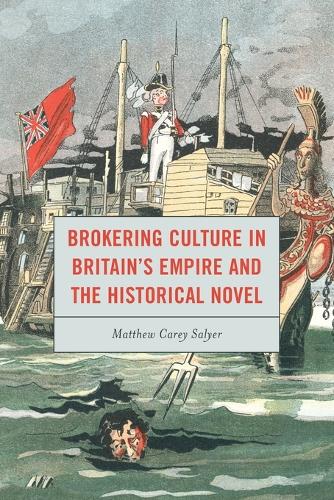
Книга Brokering Culture in Britain's Empire and the Historical Novel
Brokering Culture in Britain's Empire and the Historical Novel examines the relationship between the historical sensibilities of nineteenth-century British and American “romancers” and the conceptual frameworks that eighteenth-century imperial interlocutors used to imagine and critique their own experiences of Britain’s diffused, tenuous, and often accidental authority. Salyer argues that this cultural experience, more than what Lukács had in mind when he wrote of a mass historical consciousness after Napoleon, gave rise to the Romantic historiographical approach of writers such as Walter Scott, James Fenimore Cooper, Charles Brockden Brown and Frederick Marryat. This book traces the conversion of the eighteenth-century imperial speaker into the nineteenth-century “romance” hero through a number of proto-novelistic responses to the problem of Imperial history, including Edmund Burke in the Annual Register and the celebrated court case of James Annesley, among others. The author argues that popular Romantic novels such as Scott’s Waverley and Cooper’s The Pioneers convert the problem of narrating the political geographies of eighteenth-century Empire into a discourse of history, placing the historical realities of negotiating Imperial authority at the heart of a nineteenth-century project that fictionalized the possibilities and limits of political historical agency in the modern nation state.
"
In this intricate exploration of literature and history, Salyer (United States Military Academy, West Point) illuminates the way politics and imperialism infect 18th- and 19th-century texts. Whereas literature is often analyzed in terms of postcolonial history, Salyer suggests that history and historical accounts of imperial adventures correspond to and create literary forms in novels at the same time that novels invoke the imperial enterprise. . . Readers will appreciate how Salyer weaves the somewhat haphazard British consciousness of imperial changes with historical fiction and tales of empire to examine American and British writers and writing, such as James Fenimore Cooper, Sir Walter Scott, Charles Brockden Brown, Blackwood’s Magazine, and Rudyard Kipling. Detailed and complex in argument, this critical text demands a careful academic reader. Those interested in how historical texts come to be mined for the historical-romance content of 19th-century novels will especially appreciate the work on Kipling’s late empire perspective as a counterpoint to Frederick Marryat’s lived naval experience, captured in works like the The Phantom Ship (1839). Summing Up: Recommended. Graduate students, researchers, faculty.
" - Choice