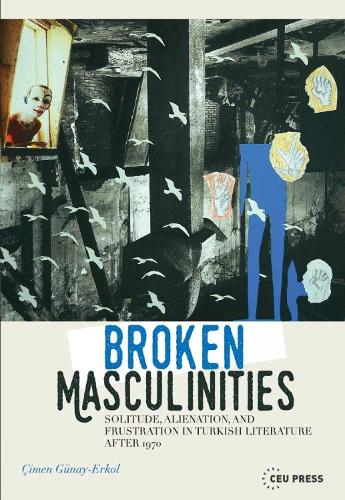
Книга Broken Masculinities: Solitude, Alienation, and Frustration in Turkish Literature After 1970
Broken Masculinities portrays the post-dictatorial novel of the 1970s in all its complexity, and introduces the reader to a 1968-era Turkey, a period which challenges Turkey's now reinforced Islamic image by portraying the quest for sexual liberation and critical student uprisings. Gunay-Erkol argues that the literature written after the 1970 coup in Turkey constitutes a coherent sub-genre and needs to be considered together. These novels share a common ground which is rich in images of men and women craving for power: general isolation, sexual-emotional frustration, and a traumatic sense of solitude and alienation. This book is an original and significant contribution to two major fields of study: (1) gender and sexuality with respect to formation of subjectivity through literature, and (2) modern literature and history through the study of Turkish literature. The chief concern in this book is not only literature's response to a particular period in Turkey, but also the role of literature in bearing witness to trauma and drastic political acts of violence-and coming to terms with them.
"Aufschlussreich ist die Arbeit für weitere kulturwissenschaftliche Themenfelder wie beispielsweise die Frage nach dem Umgang mit Gewalterfahrungen und autoritärer Erziehung. Die Verfasserin unterstreicht mehrfach den Stellenwert der Arbeit an der Schnittstelle zwischen Literatur, Geschichtsschreibung, Politik und Erinnerungskultur. Die Arbeit ist klar und wohl proportioniert aufgebaut. Die Studie ist für Fachkreise und für die Betrachtung der behandelten Autor/innen äußerst empfehlenswert. Über diese Kreise hinaus ist sie gewiss für diejenigen, die sich mit türkischer Prosaliteratur, mit der politischen Kultur der Türkei und ihrer Geschichte, der Rolle der Frau in der türkischen Gesellschaft befassen, äußerst lesenswert. Inspirierend ist das Buch außerdem für alle, die sich mit Männlichkeit in autoritären patriarchal geprägten Systemen und der literarischen Verarbeitung von Gewalterfahrungen befassen." - Orientalistische Literaturzeitung