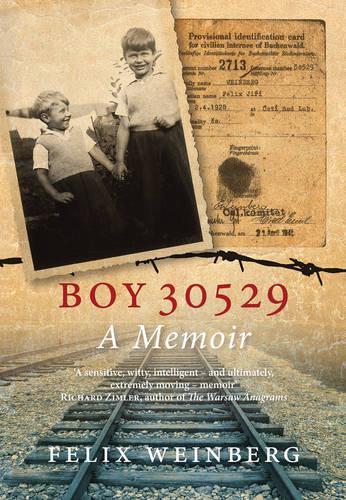
Книга Boy 30529: A Memoir
Searing, frank memoir of childhood in the German concentration camps
"Anyone who survived the exterminations camps must have an untypical story to tell. The typical camp story of the millions ended in death ... We, the few who survived the war and the majority who perished in the camps, did not use and would not have understood terms such as 'holocaust' or 'death march.' These were coined later, by outsiders."
Boy 30529 tells the story of a child who at the age of twelve lost everything: hope, home, and even his own identity. Born into a respectable Czech family, Felix's early years were idyllic. But when Nazi persecution threatened in 1938, his father travelled to England, hoping to arrange for his family to emigrate there. His efforts came too late, and his wife and children fell into the hands of the Fascist occupiers.
Thus begins a harrowing tale of survival, horror and determination. Over the following years, Felix survived five concentration camps, including Terezín, Auschwitz and Birkenau, as well as, by the skin of his teeth, the Death March from Blechhammer in 1945. Losing both his brother and mother in the camps, Felix was liberated at Buchenwald and eventually reunited at the age of seventeen with his father in Britain, where they built a new life together.
Boy 30529 is an extraordinary memoir, as well as a meditation on the nature of memory. It helps us understand why the Holocaust remains a singular presence at the heart of historical debate.
"An unusually good-natured memoir about life in the Nazi camps and the travails of being a postwar refugee. Weinberg ... has a quick, curious mind...A revelation ... told with both candor and odd innocence." - Kirkus Reviews
"A very witty and highly readable account of life in Nazi camps, with truly original information and an amazing sense of humour. A great lesson in resilience, survival, hope-and genuine modesty." - The Arabs and the Holocaust
"Told with an honest, contemporary, sometimes wry viewpoint, Weinberg's graphic memories are haunting, as he searches the Web and historical archives to find out now what he did not know then, while it was happening to him: where he was marching, how many died. The dual perspective, then and now, and the blend of family intimacy (including occasional photos) with the gripping, authoritative historical overview make this an essential title for discussion." - Booklist