Книга Bookbindings: An Illustrated History
Bindings have been an essential – and often beautiful – component of books since the codex form was invented 2,000 years ago. They make books work, but they also provide an opportunity for binders to display their skills. Until book trade processes were industrialised in the nineteenth century, every binding was a unique handcrafted object, no matter how simple or elaborate it now looks from the outside. Bindings have been made of all kinds of materials – calfskin, parchment, vellum, ivory, even silver – and embellished using many different techniques, to satisfy the wishes of owners from students to kings. The ways in which they were produced and decorated have evolved steadily over time, and many countries have their own distinctive traditions. Bindings may testify to the taste and social status of wealthy connoisseurs, or to the economic necessities of ordinary households. Because they can often be dated and localised, they also give us information about the histories of individual volumes.
This lavishly illustrated book provides a fascinating history of the development of bookbindings from Roman times to the present day. Almost all the examples are chosen from the shelves of the Bodleian Library, showcasing the outstanding collection of historic bindings to be found there.
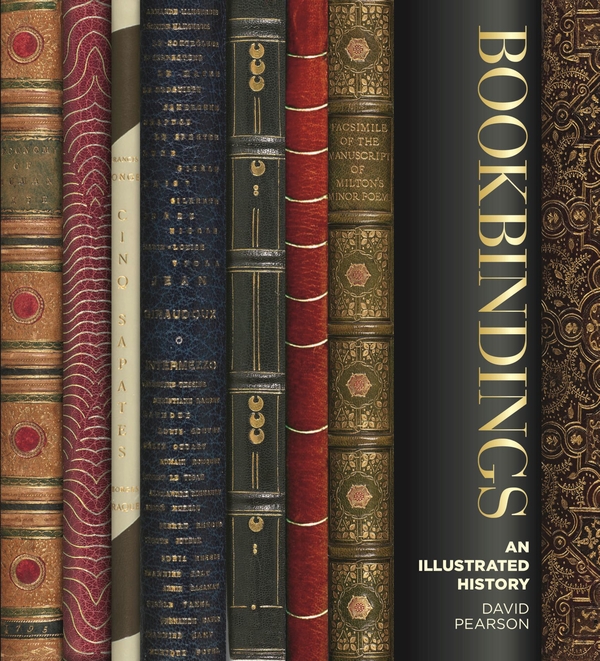
Bookbinding history has an extensive literature. Some of it comprises catalogues or sets of examples from particular libraries, with an emphasis on associating each binding with particular workshops, and referencing related bindings with the same tooling. Other books in the field focus more on technique, and its historical development. These kinds of books are primarily used by professionals working with historic bindings. More accessible books tend to be small pictorial or coffee-table books, which are little more than a series of images of expensively-decorated bindings. This book will try to bridge that divide; it will be written by an expert who has written books of the former kind, but who is keen to broaden interest in the book as a material object, beyond the walls of the academy. It will be a handsome book, quarto or small quarto format with many full-page colour illustrations of attractive bindings, but its text will stress that the interest of bindings goes beyond the appreciation of beautiful things made by artist-craftsmen. Bindings are an integral, and essential, component of books as a whole; they influence their users, reflect their ideas about books or about themselves, and testify to their individual stories. The ways they have been made and decorated have evolved steadily over time, and many countries have their own distinctive traditions; until mechanisation came to the book trade in the ninteenth century, every binding was a unique handcrafted object, no matter how simple or elaborate it looks from the outside.
"
[This] book is a lavishly illustrated, accessible guide to the development of bookbindings from Roman times to the present day.
" - Newsletter