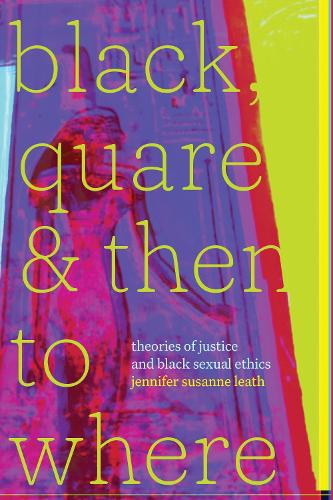
In Black, Quare, and Then to Where jennifer susanne leath explores the relationship between Afrodiasporic theories of justice and Black sexual ethics through a womanist engagement with Maât the ancient Egyptian deity of justice and truth. Maât took into account the historical and cultural context of each human’s life, thus encompassing nuances of politics, race, gender, and sexuality. Arguing that Maât should serve as a foundation for reconfiguring Black sexual ethics, leath applies ancient Egyptian moral codes to quare ethics of the erotic, expanding what relationships and democratic practices might look like from a contemporary Maâtian perspective. She also draws on Pan-Africanism and examines the work of Alice Walker, E. Patrick Johnson, Cheikh Anta Diop, Sylvia Wynter, Sun Ra, and others. She shows that together these thinkers and traditions inform and expand the possibilities of Maâtian justice with respect to Black sexual experiences. As a moral force, leath contends, Maât opens new possibilities for mapping ethical frameworks to understand, redefine, and imagine justices in the United States.
"“Carving out a new pathway for grappling with the Du Boisian Negro problem and the perennial crisis of American democracy, Black, Quare, and Then to Where offers a creative, compelling, and stunning exploration into how Pan-Africanism and Black nationalism lay the epistemic groundwork for building a new Black sexual ethics. I don’t know of any other womanists, feminists, or ethicists since Black Power who frame justice as broadly as jennifer susanne leath does in this powerful book.”" - We Testify with Our Lives: How Religion Transformed Radical Thought from Black Power to Black Lives Matter