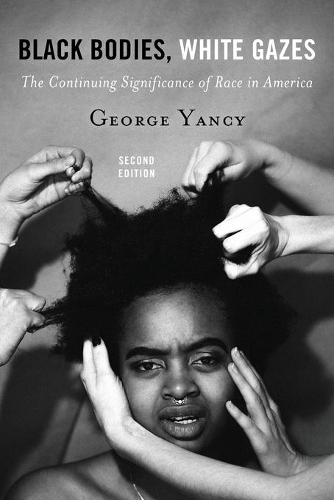
Книга Black Bodies, White Gazes: The Continuing Significance of Race in America
Following the deaths of Trayvon Martin and other black youths in recent years, students on campuses across America have joined professors and activists in calling for justice and increased awareness that Black Lives Matter. In this second edition of his trenchant and provocative book, George Yancy offers students the theoretical framework they crave for understanding the violence perpetrated against the Black body. Drawing from the lives of Ossie Davis, Frantz Fanon, Malcolm X, and W. E. B. Du Bois, as well as his own experience, and fully updated to account for what has transpired since the rise of the Black Lives Matter movement, Yancy provides an invaluable resource for students and teachers of courses in African American Studies, African American History, Philosophy of Race, and anyone else who wishes to examine what it means to be Black in America.
"This second edition of philosopher Yancy's book updates the cases and events since its 2008 publication. The new edition adds two chapters to expand the philosophical examination of whiteness in the US. Yancy challenges philosophers to engage the world, rather than focusing just on theory. Beginning with the ‘myth of a post-racial America,’ the author examines the impact of the white body as seer on the black body as ‘not mattering.’ Yancy (Emory Univ.) explores the ontological element of the white gaze in US cultural constructs, noting that ‘the white gaze in its active form, [is] implicative of a site of white power, hegemony, and privilege.’ In the second edition, Yancy establishes the concept of suturing and unsuturing in a way that will open dynamic conversations with students. The second edition is a mandatory read for those interested in critical race theory. The book is engaging, but challenging in content. A background in philosophy is helpful, but not required. This intense and enlightening work will require all readers to self-assess, is a required purchase for libraries, and will be useful in upper-level race/philosophy courses. Summing Up: Essential. Upper-division undergraduates and above. Professionals." - CHOICE