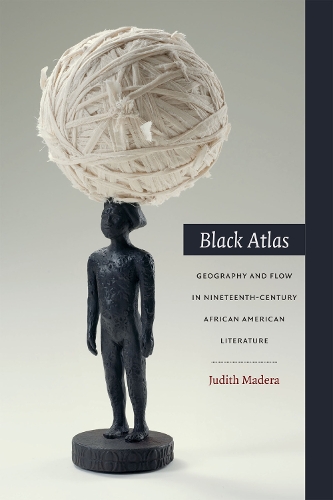
Книга Black Atlas: Geography and Flow in Nineteenth-Century African American Literature
Black Atlas presents definitive new approaches to black geography. It focuses attention on the dynamic relationship between place and African American literature during the long nineteenth century, a volatile epoch of national expansion that gave rise to the Civil War, Reconstruction, pan-Americanism, and the black novel. Judith Madera argues that spatial reconfiguration was a critical concern for the era's black writers, and she also demonstrates how the possibility for new modes of representation could be found in the radical redistricting of space. Madera reveals how crucial geography was to the genre-bending works of writers such as William Wells Brown, Martin Delany, James Beckwourth, Pauline Hopkins, Charles Chesnutt, and Alice Dunbar-Nelson. These authors intervened in major nineteenth-century debates about free soil, regional production, Indian deterritorialization, internal diasporas, pan–American expansionism, and hemispheric circuitry. Black geographies stood in for what was at stake in negotiating a shared world.
"...an illuminating study of place and place-making." - Transfers
"Simply put: Black Atlas flows. It is not narratively or conceptually simplistic—far from it ... Madera conducts readers through fluid valences of locale, terrain at once domestic, international, human, and economic." - Studies in the Novel
"Black Atlas provides a series of inspiring new approaches to earlier African American literature while demonstrating the diverse interpretive possibilities available through a geographically attuned literary criticism." - Journal of American History
"Making a compelling case for geography as flow (as well as geography and flow) in this examination of African American contributions to literature, Madera provides new insights into the complexities of 'place' that apply to any consideration of the relation between humans and their environments. Highly recommended." - Choice
"Madera’s book illuminates numerous fascinating literary histories that would on their own make Black Atlas a treasure. But she does far more, which is to incisively theorize the relationship between the spatial imagination and literature. Her introduction is a stunning primer on key debates about geography that cuts across the fields of philosophy, literature, and cultural studies; it is essential reading for any literary scholar interested in place and space." - American Literature