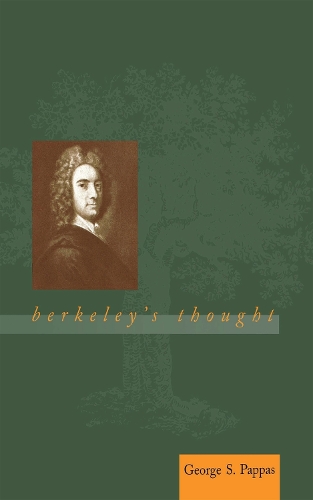
Книга Berkeley's Thought
In this highly original account of Bishop George Berkeley's epistemological and metaphysical theories, George S. Pappas seeks to determine precisely what doctrines the philosopher held and what arguments he put forward to support them. Specifically, Pappas overturns accepted opinions about Berkeley's famous attack on the Lockean doctrine of abstract ideas. Berkeley's criticism of these ideas had been thought relevant only to his views on language and to his nominalism; Pappas persuasively argues that Berkeley's ideas about abstraction are crucial to nearly all of the fundamental principles that he defends.Pappas demonstrates how an adequate appreciation of Berkeley's views on abstraction can lead to an improved understanding of his important principle of esse is percipi, and of the arguments Berkeley proposes in support of this principle. Pappas also takes up Berkeley's widely rejected claim to be a philosopher of common sense. He assesses the validity of this self-description and considers why Berkeley might have chosen to align himself with a commonsense position. Pappas shows how three core concepts—abstraction, perception, and common sense—are central to and interdependent in the work of one of the major figures of early modern Western thought.
In this highly original account of Bishop George Berkeley's epistemological and metaphysical theories, George S. Pappas seeks to determine precisely what doctrines the philosopher held and what arguments he put forward to support them. Specifically, Pappas overturns accepted opinions about Berkeley's famous attack on the Lockean doctrine of abstract ideas. Berkeley's criticism of these ideas had been thought relevant only to his views on language and to his nominalism; Pappas persuasively argues that Berkeley's ideas about abstraction are crucial to nearly all of the fundamental principles that he defends.
Pappas demonstrates how an adequate appreciation of Berkeley's views on abstraction can lead to an improved understanding of his important principle of esse is percipi, and of the arguments Berkeley proposes in support of this principle. Pappas also takes up Berkeley's widely rejected claim to be a philosopher of common sense. He assesses the validity of this self-description and considers why Berkeley might have chosen to align himself with a commonsense position.
Pappas shows how three core concepts—abstraction, perception, and common sense—are central to and interdependent in the work of one of the major figures of early modern Western thought.
"
One may disagree with Pappas over this or that point of interpretation. But his overall accomplishment is great, well worthy of serious discussion. Berkeley's Thought will appeal to analytical philosophers as well as to Berkeley scholars. Both will commend Pappas for his remarkable clarity.
" - Dialectica"
Pappas is mainly interested in Berkeley's views on abstraction.... His discussion of these issues is by far the most detailed and exhaustive in the literature. And his subsequent discussions of Berkeley's views about perception, and of the justice of his repeated claim to be fighting for common sense against the distorted views of philosophers, are models of scholarly thoroughness, and clear and helpful throughout.
" - Times Literary Supplement"
Pappas presents a very detailed analysis and interpretation of Berkeley's epistemology and metaphysics.... He is always clear and to the point.
" - Choice"
Pappas's commentary is original and analytically rigorous, and his claims are generally well-documented with texts. Readers will learn as much about the broader philosophical issues at play as about Berkeley. Pappas's most provocative work stems from his efforts to work out the full interpretative implications of Berkeley's views of abstraction.
" - The Philosophical Review