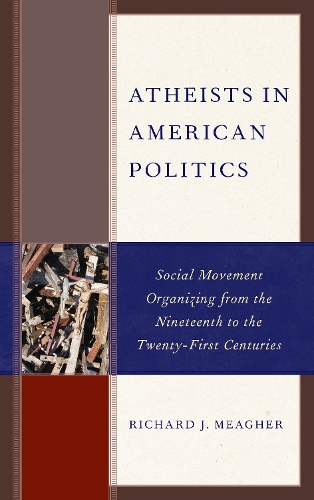
Книга Atheists in American Politics: Social Movement Organizing from the Nineteenth to the Twenty-First Centuries
Today atheists, it seems, are everywhere. Nonbelievers write best-selling books and proudly defend their views in public; they have even hired a lobbyist. But, as political scientist Richard J. Meagher shows, atheist political activism is not a new phenomenon. From the "Freethought" movement of the late 1800s, to postwar "rationalists" and "humanists," to today's proud atheists, nonbelievers have called for change within a resistant political culture. While atheist organizing typically has been a relatively lonely and sad affair, advances in technology and new political opportunities have helped atheists to finally gain at least some measure of legitimacy in American politics. In Atheists in American Politics, one of the first works to take atheism seriously as a social movement, Meagher highlights key moments within the political history of atheism and freethought, and examines how the changing circumstances that surround the movement help explain political mobilization. In doing so, this book also highlights the ways that social movements in general gain momentum, and how a number of interlocking factors are often necessary to enable a movement to "take off" in American politics.
"Meagher manages to pack an evocative outline of 150 years of American atheism into 150 pages, and Atheists in American Politics is an invaluable addition to any introduction to the history of American secularism." - Journal of Church and State
"Each chapter of Atheists in American Politics provides a clear introduction to critical moments throughout the history of atheist organizing. Meagher is successful in tying together different threads of political struggle, a thematic strength due to his attention to familiar social movement territories such as resources and effectiveness. . . . His conceptual framework into the analysis, his attention to detail and the subsequent analysis of contemporary atheist activism advances our understanding of crucial moments in the maturation of the American atheist movement. Overall, this is a fascinating book which should find an audience among scholars engaged with social movement approaches to both religion and nonreligion." - Mobilization