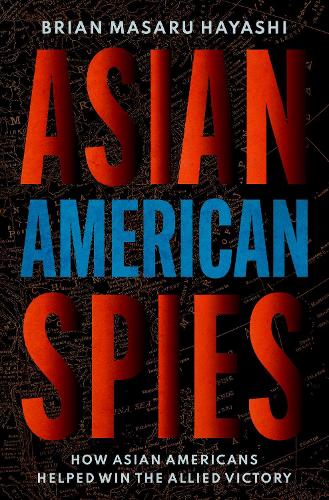
Книга Asian American Spies: How Asian Americans Helped Win the Allied Victory
A recovery of the vital role Chinese, Japanese, and Korean Americans played in US intelligence services in Asia during World War II. Spies deep behind enemy lines; double agents; a Chinese American James Bond; black propaganda radio broadcasters; guerrilla fighters; pirates; smugglers; prostitutes and dancers as spies; and Asian Americans collaborating with Axis Powers. All these colorful individuals form the story of Asian Americans in the Office of Strategic Services (OSS), the forerunner of today's CIA. Brian Masaru Hayashi brings to light for the first time the role played by Chinese, Japanese, and Korean Americans in America's first centralized intelligence agency in its fight against the Imperial Japanese forces in east Asia during World War II. They served deep behind enemy lines gathering intelligence for American and Chinese troops locked in a desperate struggle against Imperial Japanese forces on the Asian continent. Other Asian Americans produced and disseminated statements by bogus peace groups inside the Japanese empire to weaken the fighting resolve of the Japanese. Still others served with guerrilla forces attacking enemy supply and communication lines behind enemy lines. Engaged in this deadly conflict, these Asian Americans agents encountered pirates, smugglers, prostitutes, and dancers serving as the enemy's spies, all the while being subverted from within the OSS by a double agent and without by co-ethnic collaborators in wartime Shanghai. Drawing on recently declassified documents, Asian American Spies challenges the romanticized and stereotyped image of these Chinese, Japanese, and Korean American agents--the Model Minority-while offering a fresh perspective on the Allied victory in the Pacific Theater of World War II.
"Recognizing their (Asian Americans) service, he provides a more intricate and nuanced account of their wartime activities." - F. Ng, CHOICE
"Hayashi argues that even though the Euroamericans leading the OSS proved more open to racial diversity than most U.S. military units in the war, the recruitment of Asian Americans was not without unique challenges given the complexities of Asian American experiences with the United States....This book represents a thoughtful examination of the questions of loyalty and identity, and it delivers on its promise of at least a few good spy adventures....This deep dive into OSS records allows Hayashi to provide detailed examples of Asian Americans involved in every unit or operation he discusses, and...he offers a useful resource for scholars interested in the OSS and the role of race in intelligence operations....Hayashi does a remarkable job weaving together context and experiences." - Meredith Oyen, Journal of American History
"By making extensive use of the personnel files of the World War II–era Office of Strategic Services, the precursor to the CIA, Hayashi provides remarkable insight into how the intelligence agency used Asian Americans in the fight against Japan." - Lawrence D. Freedman, Foreign Affairs
"Spies, triple agents, a Chinese American James Bond, Asian American Special Ops, and the paradoxical role of race in US wartime espionage—Hayashi's pioneering study is a real page-turner full of surprises!" - Gordon H. Chang, author of Ghosts of Gold Mountain: The Epic Story of the Chinese Who Built the Transcontinental Railroad
"Asian American Spies offers new and important insights on US intelligence in the Pacific War. Exploring the role of a range of fascinating figures serving in the Office of Strategic Services, it reshapes our ideas about the intersection of ethnicity and espionage during this historic conflict. Readable, fabulously researched, and full of remarkable new stories, this book is a masterpiece and should be read by anyone interested in the rise of American intelligence during the twentieth century." - Richard J. Aldrich, University of Warwick
"A rare study of how wartime necessity to fight an Asian enemy prompted the Office of Strategic Services to recruit skilled Asian Americans. It demonstrates that such wartime expediency enhanced racial diversity in the federal service, but also posed serious challenges to loyalty, citizenship, internal security, and ultimately what it means to be 'American.'" - Miles M. Yu, United States Naval Academy