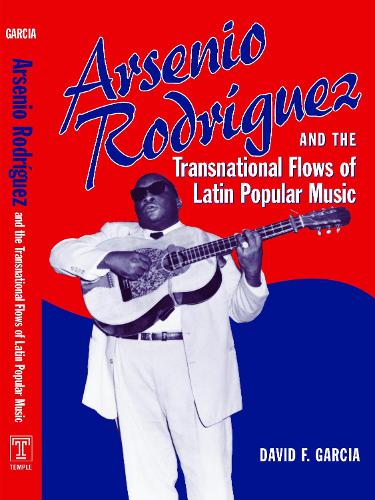
Traces Arsenio's early career in Cuba, his influence on Cuban and Latin popular music in the 1940s, his struggle for recognition at the height of mambo-mania in the 1950s, and his importance to Puerto Rican and Cuban communities in New York City, Chicago, and Los Angeles
Arsenio Rodr\u00edguez was one of the most important Cuban musicians of the twentieth century. In this first scholarly study, ethnomusicologist David F. Garc\u00eda examines Rodr\u00edguez's life, including the conjunto musical combo he led and the highly influential son montuno style of music he created in the 1940s. Garc\u00eda recounts Rodr\u00edguez's battle for recognition at the height of \u0022mambo mania\u0022 in New York City and the significance of his music in the development of salsa. With firsthand accounts from relatives and fellow musicians, Arsenio Rodr\u00edguez and the Transnational Flows of Latin Popular Music follows Rodr\u00edguez's fortunes on several continents, speculating on why he never enjoyed wide commercial success despite the importance of his music. Garc\u00eda focuses on the roles that race, identity, and politics played in shaping Rodr\u00edguez's music and the trajectory of his musical career. His transnational perspective has important implications for Latin American and popular music studies.