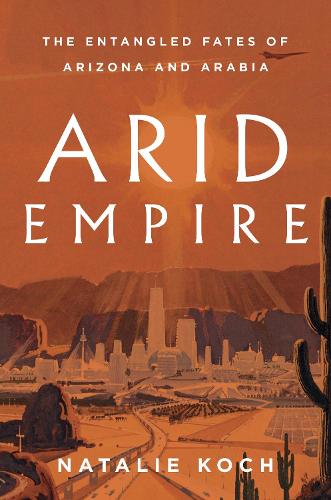
Книга Arid Empire: The Entangled Fates of Arizona and Arabia
A revelatory new history of the colonization of the American West, by way of camels, date palms, and Biosphere 2
**Longlisted for the 2023 Cundill History Prize**
The iconic deserts of the American southwest could not have been colonized and settled without the help of desert experts from the Middle East. For example: In 1856, a caravan of thirty-three camels arrived in Indianola, Texas, led by a Syrian cameleer the Americans called "Hi Jolly." This "camel corps," the US government hoped, could help the army secure the new southwest swath of the country just wrested from Mexico. Though the dream of the camel corps - and sadly, the camels - died, the idea of drawing on expertise, knowledge, and practices from the desert countries of the Middle East did not.
As Natalie Koch demonstrates in this evocative, narrative history, the exchange of colonial technologies between the Arabian Peninsula and United States over the past two centuries - from date palm farming and desert agriculture to the utopian sci-fi dreams of Biosphere 2 and Frank Herbert's Dune - bound the two regions together, solidifying the colonization of the US West and, eventually, the reach of American power into the Middle East. Koch teaches us to see deserts anew, not as mythic sites of romance or empty wastelands but as an "arid empire," a crucial political space where imperial dreams coalesce.
"Arid Empire explores the dual relationship between colonization of the U.S. Southwest and diplomatic relations in the Middle East" - KPNX Channel 12
"Arid Empire is a surprising history book about the centuries-old cyclical relationship between two deserts half a world away from each other - and their continued mutual influence." - Foreword Reviews
"Koch successfully capitalizes on a series of carefully documented case studies to unpack the United States' often elusive and indirect pseudocolonial ambitions. In doing so, she reveals how, in the name of scientific progress and technological advancement, US policymakers and private companies - with close ties to institutions of higher education - gained access to desert resources and profited from them, all while claiming to reject old-world colonial attitudes. The outcomes were nonetheless similar." - Science
"Like the sunglasses in the classic sci-fi film They Live, Arid Empire gives us the lenses we need to detect and critique 20th century ideologies at work in the 21st." - Water Alternatives
"At once a fascinating history of US and Arab attempts to make the desert productive in human terms and a comprehensive discussion of what colonizing the desert means." - Counterpunch
"Arid Empire offers an insightful and beautifully written history with a unique and most-welcome transregional premise." - Enviromental History
"Simultaneously a work of historical geography, political ecology, international relations, and cultural studies, Natalie Koch's Arid Empire denaturalizes settler-colonial and modernist myths by uncovering connections between the long-term economic developments of Arizona and the Arabian Peninsula." - The AAG Review of Books