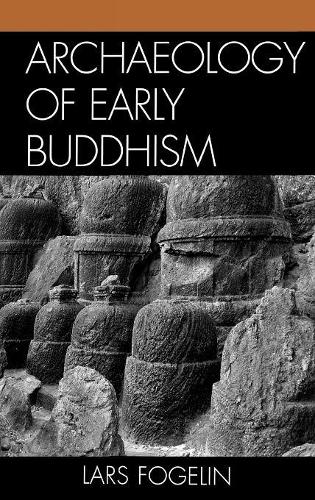
How do archaeologists explore the various dimensions of religion? Lars Fogelin uses archaeological work at Thotlakonda in Southern India as his lens in a broader examination of Buddhist monastic life. He discovers the tension between the desired isolation of the monastery and the mutual engagement with neighbors in the Early Historic Period. He also sketches how religious architectural design and use of landscape helped to shaped these relationships. Drawing on historical accounts, religious documents, and inscriptions, as well as results of his systematic archaeological survey, Fogelin is able to shed new light on the ritual and material workings of Early Buddhism in this region, and shows how archaeology can contribute to our understanding of religious practice.
"I thoroughly enjoyed this book. Fogelin's writing is very clear, even when approaching the sticky bits of archaeological theory like (shudder) Marxism and phenomenology. . . . the Archaeology of Early Buddhism is an excellent introduction both the the archaeology of Buddhism and practice theory as it is exercised in archaeology." - Archaeology.About.Com
"[Fogelin's] work will go a long way in understanding the complex issue of religion in a locality." - The Indian Economic and Social History Review, October 2008