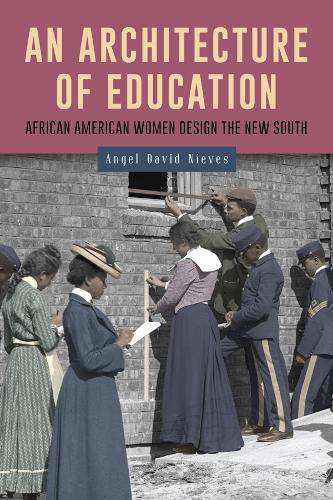
Книга An Architecture of Education: African American Women Design the New South
Examines material culture and the act of institution creation, especially through architecture and landscape, to recount a deeper history of the lives of African American women in the post-Civil War South. This volume focuses broadly on the history of the social welfare reform work of nineteenth-century African American women who founded industrial and normal schools in the American South. Through their work in architecture and education, these women helped to memorialize the trauma and struggle of black Americans. Author Angel David Nieves tells the story of women such as Elizabeth Evelyn Wright (1872-1906), founder of the Voorhees Industrial School (now Voorhees College) in Denmark, South Carolina, in 1897, who not only promoted a program of race uplift through industrial education but also engaged with many of the pioneering African American architects of the period to design a school and surrounding community. Similarly, Jane (Jennie) Serepta Dean (1848-1913), a former slave, networked with elite Northern white designers to found the Manassas Industrial School in Manassas, Virginia, in 1892. An Architecture of Education examines the work of these women educators and reformers as a form of nascent nation building, noting the ways in which the social and political ideology of race uplift and gendered agency that they embodied was inscribed on the built environment through the design and construction of these model schools. In uncovering these women's role in the shaping of African American public spheres in the post-Reconstruction South, the book makes an important contribution to the history of African Americans' long struggle for equality and civil rights in the United States. Angel David Nieves is Professor of History and Digital Humanities at San Diego State University.
"Nieves reveals an understudied dimension of black women's important work within the industrial school movement. Moreover, he has contributed to a growing trend toward the recovery of black women's intellectual labor, especially that of poor and working-class black women." - JOURNAL OF AFRICAN AMERICAN HISTORY
"An illuminating read...It is valuable in helping the lay person understand better the context and challenges to education provision in America's deep south, including attitudes to the education of African Americans at the time, and the pervasive effect of Jim Crow laws and organisations such as the Ku Klux Klan." - WOMEN'S HISTORY REVIEW
"An Architecture of Education opens doors to new actors, places, and topics in architectural history - ones that architectural historians should take note of, learn from, and pursue." - CAA REVIEWS
"An Architecture of Education showcases how interdisciplinary methodologies can help scholars overcome the silencing of African American women in traditional documentary archives. [...] Readers interested in African American intellectual history, educational history, and the history of architecture will welcome this concise analysis of the contest over racialized landscapes in the "New South."" - H-SAWH