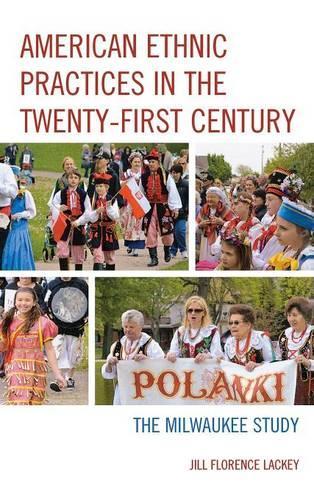
Книга American Ethnic Practices in the Twenty-first Century: The Milwaukee Study
American Ethnic Practices in the Early Twenty-first Century: The Milwaukee Study is a work based on a twelve-year research project conducted in the greater Milwaukee area by Urban Anthropology Inc. The qualitative study examined the current strength of ethnicity and the contributions that ethnic practices have made to the wider society. Since Barth (1970), social scientists—especially sociocultural anthropologists—have moved toward deconstructing ethnicity by concentrating on the malleability of ethnic identity. This work takes a new approach by focusing on ethnic practices. The most prominent findings in The Milwaukee Study were the ways that community-building activities of ethnic groups contributed to the wider society; and how this, in turn, can help restore a needed balance between individualism and collectivism in the United States. Since the first edition of Habits of the Heart (Bellah et al, 1985), public discourse about ways to restore this balance has been ubiquitous. Most discussions have focused only on strengthening families, faith communities, or neighborhoods, and have ignored the activity and potential of ethnic groups, even though it was during this span of time that interest in multiculturalism in education and politics reached its peak.
"Anthropologist Lackey (founder, Urban Anthropology Inc.) presents the findings of a study of ethnic practices among a sample of 434 individuals in the Milwaukee, Wisconsin, area. The author discusses the continued salience of ethnicity in the lives of her informants in the realms of organizational involvement, language, homeland remittances, religion, foodways, art, health care, genealogy, politics, and employment. She also presents informants' views of what they perceive as some of the primary threats to the maintenance of their ethnicity, as well as data and snapshots of informant interviews on a range of relevant topics. In a short concluding section, Lackey discusses the study's broader implications for understanding contemporary ethnicity in the US, though this section is limited to just a few pages, unfortunately. This case study from one metropolitan area will definitely be of interest to students and scholars working in ethnic studies, particularly those conducting research and teaching in the Midwest. Summing Up: Recommended. All academic levels/libraries." - CHOICE