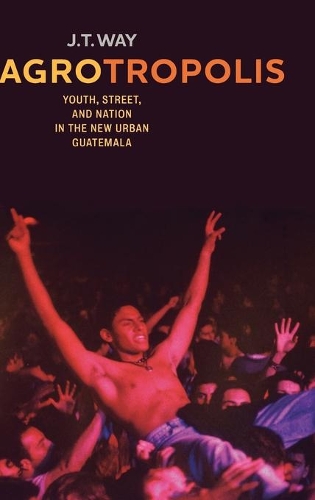
In Agrotropolis, historian J. T. Way traces the developments of Guatemalan urbanization and youth culture since 1983. In case studies that bring together political economy, popular music, and everyday life, Way explores the rise of urban space in towns seen as quintessentially "rural" and showcases grassroots cultural assertiveness. In a post-revolutionary era, young people coming of age on the globally inflected city street used popular culture as one means of creating a new national imaginary that rejects Guatemala's racially coded system of castes. Drawing on local sources, deep ethnographies, and the digital archive, Agrotropolis places working-class Maya and mestizo hometowns and creativity at the center of planetary urban history.
"Agrotropolis is a remarkably authentic work of history that deserves serious attention especially at a time when thousands of Guatemalans continue to flee for their lives from a country where hope for social justice has dimmed." - The Latin Americanist
"The book offers a distinctive, convincing, and—dare I say—optimistic look at the young people who will determine Guatemala’s future." - Hispanic American Historical Review