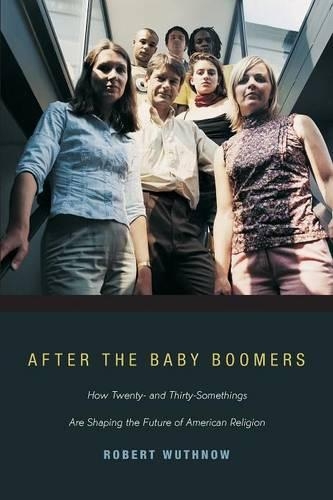
Книга After the Baby Boomers: How Twenty- and Thirty-Somethings Are Shaping the Future of American Religion
Every generation is different, and in the post-boomers we have one that is as different as it gets. For those of us who care deeply about addressing the spiritual needs of this 'next wave,' Robert Wuthnow has given us an indispensable guide in this important book. -- Richard J. Mouw, president of Fuller Theological Seminary Interesting and illuminating. There is a great deal of anxiety about the future of the church and its relation to young adults. This book speaks to those concerns, provides some sound empirical data for people to chew on, and will be often referenced. -- Christian Smith, coauthor of "Soul Searching: The Religious and Spiritual Lives of American Teenagers" This book is a contribution for church leaders and others concerned about young adults and their involvements in organized religion. The data are new and valuable and shed new insights into the intricacies of religious commitment in our society. There is no other book I am aware of quite like this one. -- Wade Clark Roof, author of "Spiritual Marketplace: Baby Boomers and the Remaking of American Religion"
Much has been written about the profound impact the post-World War II baby boomers had on American religion. But the lifestyles and beliefs of the generation that has followed--and the influence these younger Americans in their twenties and thirties are having on the face of religion--are not so well understood. It is this next wave of post-boomers that Robert Wuthnow examines in this illuminating book. What are their churchgoing habits and spiritual interests and needs? How does their faith affect their families, their communities, and their politics? Interpreting new evidence from scores of in-depth interviews and surveys, Wuthnow reveals a generation of younger adults who, unlike the baby boomers that preceded them, are taking their time establishing themselves in careers, getting married, starting families of their own, and settling down--resulting in an estimated six million fewer regular churchgoers. He shows how the recent growth in evangelicalism is tapering off, and traces how biblical literalism, while still popular, is becoming less dogmatic and more preoccupied with practical guidance. At the same time, Wuthnow explains how conflicts between religious liberals and conservatives continue--including among new immigrant groups such as Hispanics and Asians--and how in the absence of institutional support many post-boomers have taken a more individualistic, improvised approach to spirituality. Wuthnow's fascinating analysis also explores the impacts of the Internet and so-called virtual churches, and the appeal of megachurches. After the Baby Boomers offers us a tantalizing look at the future of American religion for decades to come.