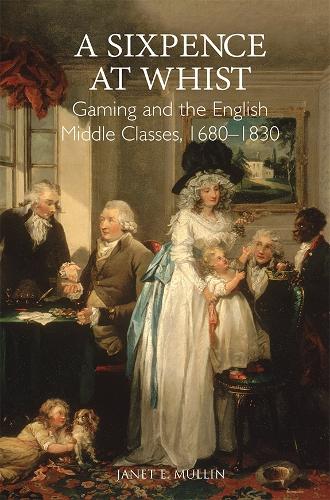
Книга A Sixpence at Whist: Gaming and the English Middle Classes, 1680-1830
Peering through the windows of private homes and Assembly Rooms alike, this book shines a new light on the middle classes during the long eighteenth century. Enlightenment thinking - the drive for order, organisation and rationality - was an underlying motive force in England's eighteenth century, influencing middle class thinking with regard to the running and improvement of business.In the same way, it shaped their choice of leisure activities. As many turned their backs on blood sports, they found that music, conversation and cards embodied rational enjoyment and exercise of human intellect and ability. For the middle classes, card play made use of skills they had in hand and could be justified on the basis of teaching the young their numbers and the importance of accounting for money lost and won. The careful score-keeping, the accounting for sums won and lost, and the order and discipline of these players' favourite card games echoed and suited their tidy lives. As important participants in polite society on the strength of their new wealth and theirincreasing social prominence, the middle classes embraced the agreeable pastimes of gentility while rejecting its dangerous extremes. Card play became a means of forming and reinforcing social and commercial bonds within complex webs of family and business circles. As they tugged the fashionable activity of gaming onto their own playing-field from the high-risk arena of the aristocracy, the middle classes were imposing order on disorder, subjecting a reckless activity to new restraints. Drawing on the personal papers of the commercial and professional classes of eighteenth-century England, A Sixpence at Whist tells the stories of these men and women at play. JANETE. MULLIN is Lecturer in History at St. Thomas University and the University of New Brunswick, both in Fredericton, N.B., Canada.
"Highly readable and well-researched..This hitherto untold story of card-play enriches historical understandings of the eighteenth-century middling sort." - CULTURAL AND SOCIAL HISTORY
"In a lively, accessible style, the author argues that card playing reflected as well as epitomized the moral and cultural values of the new 'middling sorts,' especially the ideals of politeness and sociability, thus accounting for its popularity. . . . [A]n entertaining and enjoyable book. Recommended." - CHOICE
"[A]n impressively researched monograph . . . that makes a significant and well-informed contribution to our understanding of middle class sociability and particularly the role of gaming in the social life of the English middle classes. No longer will historians be able to discuss gaming as solely, or mainly, an aristocratic and plebeian vice." - HISTOIRE SOCIALE/SOCIAL HISTORY