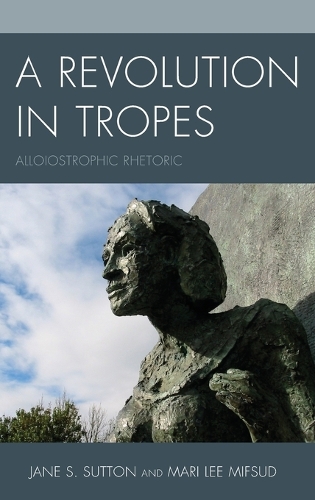
Книга A Revolution in Tropes: Alloiostrophic Rhetoric
A Revolution in Tropes is a groundbreaking study of rhetoric and tropes. Theorizing new ways of seeing rhetoric and its relationship with democratic deliberation, Jane Sutton and Mari Lee Mifsud explore and display alloiōsis as a trope of difference, exception, and radical otherness. Their argument centers on Aristotle’s theory of rhetoric through particular tropes of similarity that sustained a vision of civic discourse but at the same time underutilized tropes of difference. When this vision is revolutionized, democratic deliberation can perform and advance its ends of equality, justice, and freedom. Marie-Odile N. Hobeika and Michele Kennerly join Sutton and Mifsud in pushing the limits of rhetoric by engaging rhetoric alloiostrophically. Their collective efforts work to display the possibilities of what rhetoric can be. A Revolution in Tropes will appeal to scholars of rhetoric, philosophy, and communication
"You’re going to like this book. . . . Not only would this book be useful in a rhetorical theory or a rhetoric and composition class, it can be applied to political theory, comparative literature, and both historiography and history. Finding new ways of engaging difference in a democratic society is both timely and necessary." - Rhethoric and Public Affairs
"An original advance in the study of rhetorical theory, this book offers fine scholarship on the trope alloiosis. Having discovered this trope and its various definitions in ancient works and on a few lists of tropes over history, Sutton and Mifsud introduce alloiosis with the intent of revolutionizing rhetoric. They explain tropes of change as categorized in four systems: substitution, subtraction, addition, and transposition. The last three are governed by the figure of transmutation, alloiosis being one of transposition. This trope of difference allows rhetoric’s focus to turn from delimited horizons of possibilities to open, ongoing movement toward the unfamiliar and alien and thus invention. Rhetoric, based on Aristotle’s concept of a world at rest, is thus turned toward the concept of a world in flux. The authors argue that with the trope of alloiosis, rhetoric is capable of seeing what is illogical in certain logics about strangers (i.e., others and difference), the strengths of difference, and what has been preventive in the rhetoric of democratic deliberation. Here the authors note the interconnectedness of rhetoric, Earth, and polis. Valuable for those interested in rhetoric, speech, law, philosophy, and communication. Summing Up: Highly recommended. Graduate students, researchers, faculty." - CHOICE