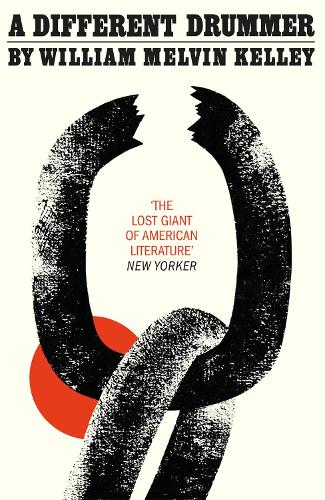
Книга A Different Drummer: the extraordinary rediscovered classic
'More than lives up to the hype' Observer
'Set to become a publishing sensation' Kirsty Lang, BBC Front Row
'An astounding achievement' Sunday Times
'The lost giant of American literature' New Yorker
June, 1957. One afternoon, in the backwater town of Sutton, a young black farmer by the name of Tucker Caliban matter-of-factly throws salt on his field, shoots his horse and livestock, sets fire to his house and departs the southern state. And thereafter, the entire African-American population leave with him.
The reaction that follows is told across a dozen chapters, each from the perspective of a different white townsperson. These are boys, girls, men and women; either liberal or conservative, bigoted or sympathetic - yet all of whom are grappling with this spontaneous, collective rejection of subordination.
In 1962, aged just 24, William Melvin Kelley's debut novel A Different Drummer earned him critical comparisons to James Baldwin and William Faulkner. Fifty-five years later, author and journalist Kathryn Schulz happened upon the novel serendipitously and was inspired to write the New Yorker article 'The Lost Giant of American Literature', included as a foreword to this edition.
"Every so often, a 'forgotten classic' is rediscovered around which the literary world rallies with praise and prediction of a 'Stoner effect' . . . A Different Drummer more than lives up to the hype, both in terms of its literary accomplishment and in the power of its political vision . . . Today the book offers us an unflinching study of the southern white American psyche at the cusp of the civil rights movement: its belligerence against change, the incomprehension and anger. It is woeful to think that almost 60 years later, Kelley's story seems just as timely and as urgent, but what a gift to literature that we have rediscovered it." - Observer
"Simple, timeless, mythic . . . an astounding achievement . . . still relevant and powerful today." - Sunday Times
"Set to become a publishing sensation." - BBC Front Row
"Black America's lost literary masterpiece." - Observer
"Astounding . . . Absolutely essential reading." - Stylist
"This fierce and brilliant novel is written with sympathy as well as sorrow. It's a myth packed with real-world resonance." - Guardian
"Wonderful . . . full of dazzling moments of social and psychological observation that jump from the page as if they were written yesterday." - Metro
"Brilliant . . . The rare first novel that makes future ones seem both inevitable and exciting." - New Yorker
"Despite the novel being over 50 years old it feels as relevant as ever, sitting alongside the likes of The Good Immigrant, Slay in Your Lane and Becoming." - Grazia
"Kelley blended fantasy and fact to construct an alternative world whose sweep and complexity drew comparisons to James Joyce and William Faulkner." - New York Times
"This first novel just perhaps could play a part in changing our history." - Kansas City Star
"[A] masterpiece . . . Kelley wrote intricate novels that identified with the rejection of dominant social orders." - Public Books
"An exceptionally powerful and elegant first novel." - Manchester Guardian
"Superbly written . . . a stunning work." - Kirkus
"A rare first novel: dynamic, imaginative, and accomplished . . . It is a custom to say of first novels that they 'show promise.' But we need not say that of this one. It shows accomplishment; it shows fulfillment." - Chicago Sunday Tribune
"So brilliant is this initial novel that one must consider Mr. Kelley for tentative future placement among the paragons of American letters." - Boston Sunday Herald
"Beautifully written and thought-provoking . . . It will strike a responsive chord in all men of goodwill." - Baltimore Evening Sun
"Superb . . . The comparisons of his debut to the books of James Baldwin and Faulkner are justified." - Irish Times