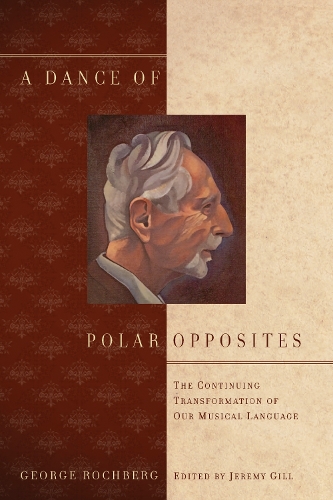
Книга A Dance of Polar Opposites: The Continuing Transformation of Our Musical Language
The renowned American composer George Rochberg (1918-2005) distilled a lifetime of insights about Western music across some three hundred years in A Dance of Polar Opposites: The Continuing Transformation of Our Musical Language. In A Dance of Polar Opposites: The Continuing Transformation of Our Musical Language, the renowned American composer George Rochberg distilled a lifetime of insights about Western music across some three hundred years. Rochberg describes how the asymmetrical tonal language of the late eighteenth century--the era of Haydn and Mozart--evolved through the gradual incursion of symmetry into a system based on the juxtaposition of tonal and atonal, asymmetrical and symmetrical--as seen in notable composers such as Webern, Prokofiev, and Rochberg himself. A Dance of Polar Opposites takes us inside the composer's studio, reveals how he assessed his and our musicalpast, and paints a picture of what he believed our musical future may be. George Rochberg (1918-2005), one of the most respected composers and writers about music in the second half of the twentieth century, was a finalist twice for the Pulitzer Prize and longtime professor at University of Pennsylvania. His writings include The Aesthetics of Survival: A Composer's View of Twentieth-Century Music (which won the ASCAP-Deems Taylor Award);the memoir Five Lines, Four Spaces; and a volume of letters. Jeremy Gill was a student of George Rochberg and is a composer, conductor, and pianist.
"A fresh perspective on a still-fresh topic. . . . Gives musical scholarship a living and breathing pulse. . . . Invaluable to composers writing in the wake of the post-tonal era of music. . . . Would be a great addition to a variety of courses on twentieth-century music. . . . Easily belongs on the shelves of university libraries. MUSIC REFERENCE SERVICES QUARTERLY [Jacob Kohut] A Dance of Polar Opposites is (in this expertly edited version) by some way Rochberg's most efficiently organised and relevantly illustrated statement." - MUSICAL TIMES
"Compelling. . . . Rochberg's keen look at the past clearly lays a path for the future." - CHOICE