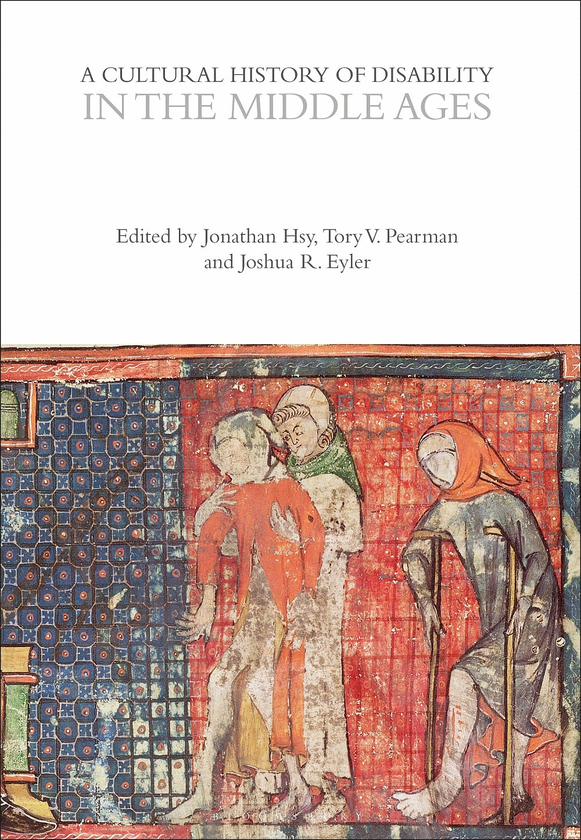
The Middle Ages was an era of dynamic social transformation, and notions of disability in medieval culture reflected how norms and forms of embodiment interacted with gender, class, and race, among other dimensions of human difference. Ideas of disability in courtly romance, saints’ lives, chronicles, sagas, secular lyrics, dramas, and pageants demonstrate the nuanced, and sometimes contradictory, relationship between cultural constructions of disability and the lived experience of impairment.
An essential resource for researchers, scholars, and students of history, literature, visual art, cultural studies, and education, A Cultural History of Disability in the Middle Ages explores themes and topics such as: atypical bodies, mobility impairment, chronic pain and illness, blindness, deafness, speech, learning difficulties, and mental health.
Table of contents
List of Figures vi–vii
Notes on Contributors viii–x
Series Preface xi–xvi
Introduction 1–18
1. Atypical Bodies 19–34
2. Mobility Impairment 35–50
3. Chronic Pain and Illness 51–66
4. Blindness 67–82
5. Deafness 83–98
6. Speech 99–114
7. Learning Difficulties 115–132
8. Mental Health Issues 133–147
References 159–179