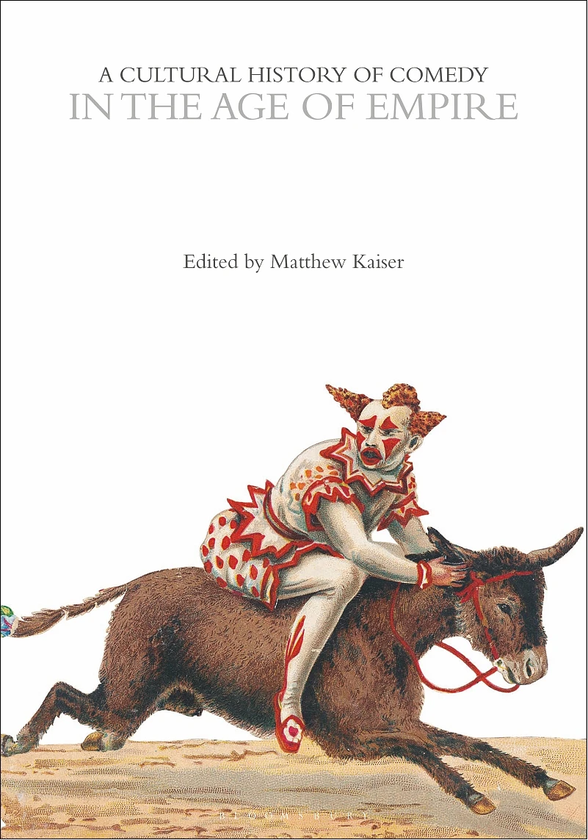
Книга A Cultural History of Comedy in the Age of Empire. Volume 5
Given the earth-shattering cultural changes and political events that mark the decades between 1800 and 1920—shifting borders, socioeconomic upheaval, scientific and technological innovation, the rise of consumerism and mass culture, unprecedented overseas expansion by European and American imperial powers—it is no wonder that people in the Age of Empire turned to comedy in order to make sense of the contradictions that structure modern identity, to navigate the sociocultural fault lines within modern life. Comical, humorous, and satirical cultural artifacts from the period capture the anxieties and aspirations, the petty resentments and lofty ideals, of a world buffeted by change. Drawing together contributions from scholars in a range of fields within 19th- and 20th-century cultural, literary, and theater studies, this volume explores aesthetic, political, and ethical dimensions to comedy in the context of blackface minstrelsy, nonsense poetry, music hall and pantomime, comic almanacs and joke books, journalism, silent film, popular novels, and hygiene magazines, among other phenomena, along the way providing a detailed account of contentious debates among social Darwinists, psychoanalysts, and political philosophers about the meaning and significance of comedy and laughter to human life.
Each chapter takes a different theme as its focus: form, theory, praxis, identity, the body, politics and power, laughter, and ethics. These eight divergent approaches to comedy in the Age of Empire add up to an extensive, synoptic coverage of the subject.
Table of contents
- List of Illustrations
- Contributors
- Series Preface
- Introduction 1–18
- 1. Form 19–42
- 2. Theory 43–66
- 3. Praxis 67–92
- 4. Identity 93–116
- 5. The Body 117–142
- 6. Politics and Power 143–170
- 7. Laughter 171–198
- 8. Ethics 199–216
- References 221–240