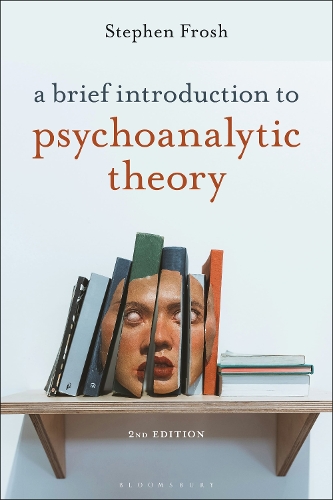
Книга A Brief Introduction to Psychoanalytic Theory
This updated edition explores the birth of psychoanalysis alongside fundamental psychoanalytic concepts. It discusses the different schools of thought that have emerged since Freud, and looks at the theory's wider application across film, literature and politics.
Psychoanalytic theory remains hugely influential to our understanding of the mind and human behaviour. It provides a rich source of ideas for therapeutic practice while offering dramatic insights for the study of culture and society, with applications that extend across film, literature and politics. Taking you step-by-step through Freud’s original ideas and their evolution, this book explores the birth of psychoanalysis and provides a clear account of fundamental psychoanalytic concepts.
New to this edition:
· A new chapter on class, gender and race
· Expanded sections on neuropsychoanalysis, relational theory and trauma
· Updated throughout to offer a succinct exploration of the history, development and current standing of psychoanalysis
Written by a highly respected authority in the field, this updated edition is essential reading for trainees in counselling and psychotherapy, as well as for students across the arts, humanities and social sciences.
A Brief Introduction to Psychoanalytic Theory is also available in audiobook format from audiobook retailers.
"This most impressive book should be welcomed not only by all coming new to the detailed study of psychoanalysis but also by experienced clinicians and trainees from many psychotherapeutic approaches." - Review of the first edition, Therapy Today
"Stephen Frosh… has written an intelligent, informed and engaging book. …It is eloquent, clear without being simplistic, erudite without being pompous. Frosh understands his subject matter and has a facility for explanation." - Review of the first edition, Psychoanalytic Psychotherapy
"Few can render psychoanalysis with such remarkable accessibility as Stephen Frosh. This introduction blends conceptual clarity and contemporary reflections, making a complex subject engaging for anyone wishing to explore it." - Nini Kerr, Senior Lecturer in Counselling and Psychotherapy, University of Edinburgh, UK