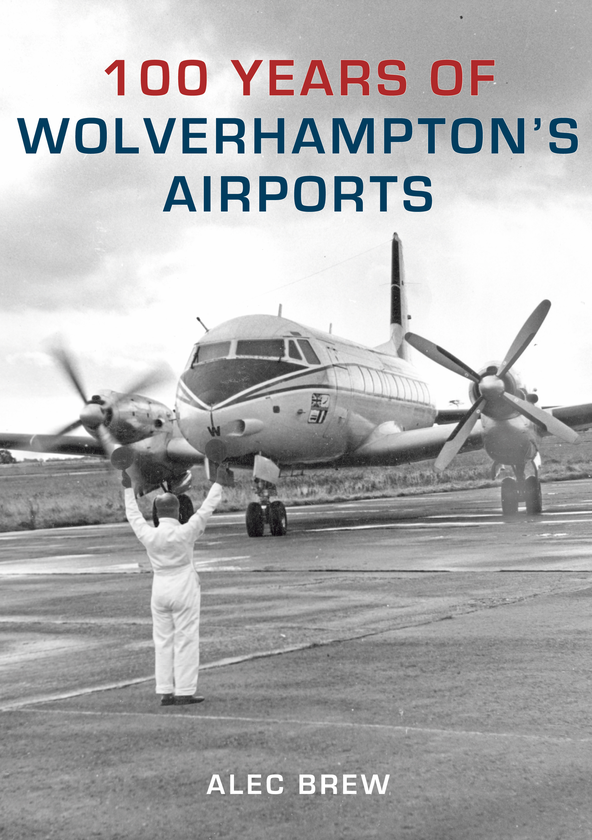
Книга 100 Years of Wolverhampton's Airports
The pioneer of British Airships, E. T. Willows, based his airship at Dunstall Park for a while, and balloon pilots took advantage of the proximity of Wolverhampton Gas Works to inflate their envelopes before setting course for wherever the wind took them. RAF Pendeford was built to serve the local area. Wolverhampton's first true municipal airport was built at Barnhurst Farm, Pendeford.
Though flying had already commenced, in 1936, Wolverhampton Airport did not officially open until 27 June 1938, exactly twenty-eight years after Dunstall Park. The municipal airport was taken over as a training airfield, as RAF Wolverhampton, during the War, but resumed its civil function at the end. RAF Perton closed after the War, but remained largely untouched until the huge new housing estate was built on it, during the 1970s. A similar fate awaited Pendeford after its closure in 1971. The former RAF airfield at Halfpenny Green was re-opened, for civil flying in 1961. Halfpenny Green had been built as a RAF training airfield during the War, and was re-opened after its post-war closure in the early 1950s. After lying dormant for seven years, it became Wolverhampton's de facto airport with the closure of Pendeford, a fact recognised by its subsequent re-branding, firstly as Wolverhampton Business Airport, and now Wolverhampton Halfpenny Green Airport. On 27 June 2010, Wolverhampton starts its hundredth year of having a designated local airport.